


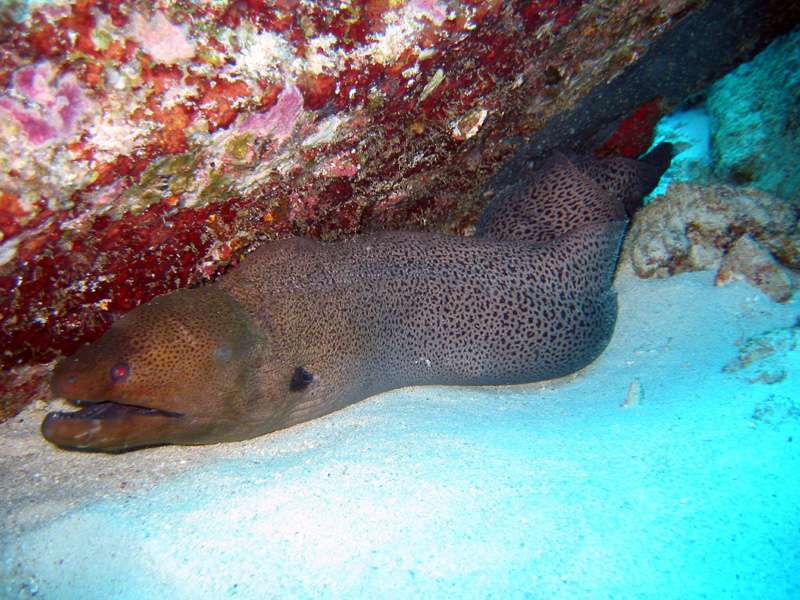
Giant Moray Eel
Scientific name Gymnothorax javanicus
The Giant Moray is the largest moray eel found on Indo-Pacific reefs — and an unmistakable presence around Koh Tao. Growing up to 3 metres in length, they are thick-bodied, muscular predators with a mottled brown and cream pattern that helps them blend perfectly into coral and rock.
Most often, you’ll see just the head protruding from a crevice, jaws rhythmically opening and closing. This isn’t aggression — it’s simply how morays breathe, pumping water over their gills. Up close, their size, heavy jawline and sharp teeth give them a prehistoric look.
Around Koh Tao, Giant Morays are reliable sightings on deeper reef slopes, pinnacles and rocky sites. They tend to hold territories and can often be found in the same crevice dive after dive. Occasionally, especially at night, you may see one fully out in the open, weaving slowly across the reef in search of food.
Giant Morays are apex reef predators. They feed on fish, octopus and crustaceans, using both powerful jaws and a second set of pharyngeal jaws inside their throat to grip prey securely. Their presence indicates a healthy, functioning reef ecosystem.
Despite their intimidating appearance, they are not aggressive toward divers. Bites are extremely rare and almost always linked to feeding attempts or accidental intrusion into their hiding place. With good buoyancy and respectful distance, encounters are calm and safe.
Seeing a Giant Moray up close is always impressive — a reminder that beneath the calm reef surface, serious predators are quietly watching.
Find Giant Moray Eel at...
Divemaster's tip
Scan rocky crevices and overhangs between 10–30 metres. Their head shape and patterned skin often give them away before their full body is visible.
Keep hands tucked in and maintain neutral buoyancy. Morays feel threatened when divers get too close to their shelter. On night dives, move slowly — you may see them actively hunting across the reef.
What do they eat?
Giant Morays feed on reef fish, octopus and crustaceans. They rely heavily on smell rather than eyesight to locate prey and use their powerful jaws to secure it.
As nocturnal hunters, they are most active after dark, making Koh Tao night dives a great opportunity to see their full size and behaviour in action.
