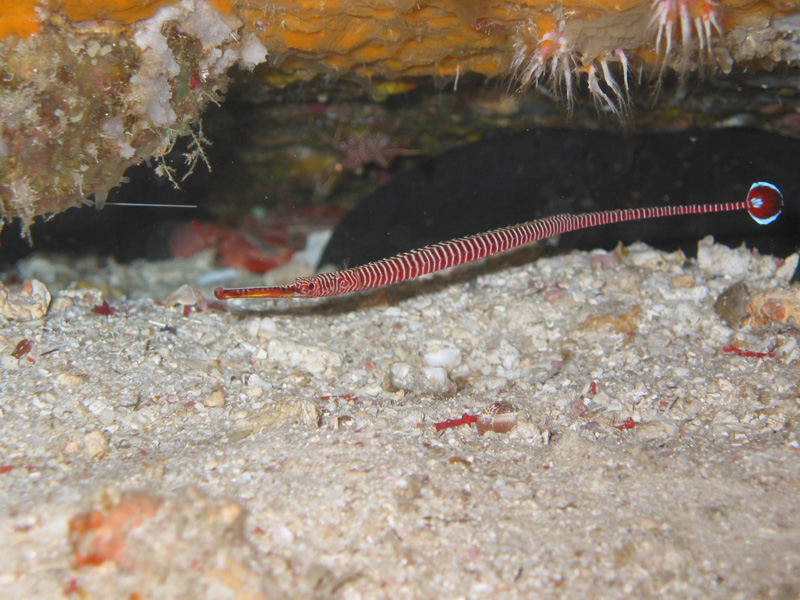
Pipefish
Scientific name Syngnathidae
Pipefish are slender, elegant relatives of seahorses, sharing the same family (Syngnathidae). With their long, tube-like bodies and extended snouts, they often look like animated pieces of sea grass drifting through the reef.
Around Koh Tao, pipefish are occasionally spotted weaving through coral branches, hovering above sandy patches or blending into seagrass beds. Their camouflage is exceptional — many divers swim straight past them without noticing.
Like seahorses, pipefish swim using small, rapidly vibrating dorsal fins, giving them a delicate, almost floating movement. They are quiet hunters, feeding on tiny crustaceans by sucking them into their narrow snout with a sudden vacuum-like motion.
One fascinating trait: in many species, the males carry the eggs. Depending on the species, eggs may be attached to the male’s belly or held in a specialised brood pouch until they hatch.
Pipefish are indicators of healthy reef and seagrass habitats. Their presence shows that small prey species are abundant and that the environment remains relatively undisturbed.
Find Pipefish at...