


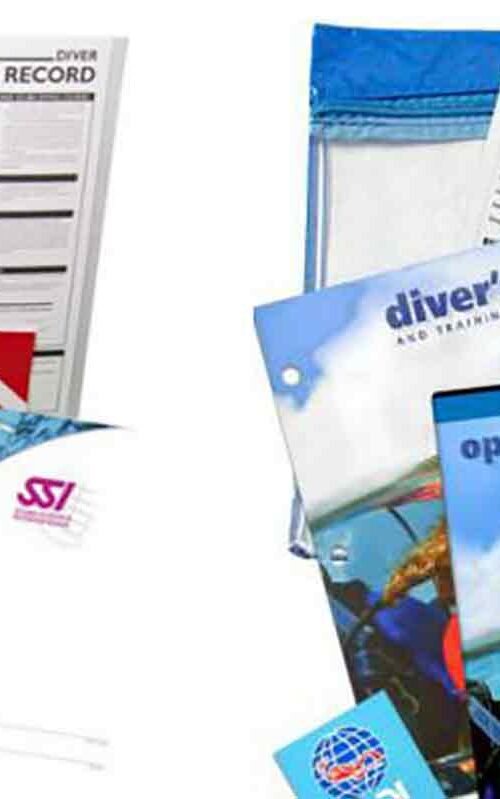
As one of the longest established Diving schools in the world, we’ve probably been asked every question about scuba diving you could think of, especially anything to do with the Open Water PADI course that so many of our patrons come especially to do here. After all, Koh Tao diving prices are renowned for being the cheapest in the world when it comes to getting your scuba diving certification! Even compared to our nearest neighbors on Koh Phangan and Koh Samui, the Koh Tao diving schools are still able to provide safe, high quality, professional training at much lower prices.
What’s the difference between an SSI Course and a PADI Course?
It’s the one question we are asked time and time again – what is the difference between the two major Scuba Diver Training agencies we have today? PADI (Professional Association of Diving Instructors), & SSI- (Scuba Schools International)? Google will tell you that PADI – is the world’s largest scuba training agency, and a PADI Instructor can teach independent of a dive center. SSI, on the other hand, is the world’s largest store-based training agency which means all SSI Instructors and Dive Masters must be affiliated with a physical store in order to teach a course.
So in simple English, a PADI Instructor can certify you directly through PADI, and an SSI Instructor can only certify you through a Dive Center. Neither of which makes an awful lot of difference to you, the student, other than personal preference, if the end goal is just to get your scuba diving certification.
But PADI is unquestionably better known.
From personal experience, I have seen many customers walk into my Dive center & ask to do ‘their PADI’. The team at PADI Marketing obviously do a shit hot job at promoting their brand with posters, magazine spreads, awards, sponsorships, & the huge flags & banners and stalls at every PADI dive center & Dive Expo on the planet. SSI, on the other hand, has a much smaller marketing budget so they gain from smaller dive agency fees, smaller certification cost fees, and smaller staff budgets.
There are actually over 120 dive organizations in the world that can give you an Open Water scuba diving certification, other popular ones being BSAC in the UK, CMAS in Europe, NAUI in the USA and my new personal favorite, in Italy there is the Associazione CMAS Diving Center or ACDC – which sounds way more Rock ‘n Roll.
So let’s rate the differences between PADI & SSI, shall we?
1. Are both scuba diving licenses internationally recognized?
Yes. Any of the dive organizations in the world can give you the Open Water scuba diving certification, and with it you can dive in every dive center in the world for the rest of your life – an SSI diver can of course dive in a PADI Dive center or the other way round. In fact, no dive center can turn you away just because you have a different diving license to what they offer!
AND
The PADI & SSI scuba diving licenses are also completely interchangeable – you can get certified as an Open Water Diver with SSI, then do your PADI Advanced Course, then your Rescue Course with NAUI and so on up to instructor level, without being made to repeat courses.
So no difference there then. Both scuba diving licenses are internationally recognized & interchangeable.
1 point PADI, 1 point SSI.
2. Is one cheaper than the other one?
SSI is usually cheaper, as they don’t insist that the student buy a manual/app for the course. You can borrow one of the dive centers ‘library’ books or use the app for free!
PADI, however, do insist on purchasing the materials – no matter if you are traveling around the world or learning at home. They feel that post-course review of materials is important to maintain knowledge-levels. They offer an e-book in case you don’t want to carry a pretty heavy book around with you for the rest of your trip. Globally and certainly here in Koh Tao, PADI courses do appear to be slightly more expensive than SSI courses, but that seems to be because of the difference in material prices but it may depend on what part of the world you are in.
So SSI appears cheaper. The difference in price, depending on what part of the world you are in, could equate to as much as an extra dive at the end of the course and a couple of beers to help wash it down!
SSI 2 Points. PADI 1 point.
3. Can I do the theory from home, so I can spend more time on holiday out of the classroom!
Yep! Both SSI and PADI offer their students the option to start the practical portion of the lessons online, which will save time and gives divers more time to just dive. The difference here is both price and longevity: SSI’s online learning is free, whereas with PADI you will pay about US$150. PADI offers you access to their system for one year from when you sign up, whereas with SSI it’s there for you all the time, even after the course. If you choose not to buy the book, you can simply log in and use the site as a review when you want a refresher later on! Heck Yeah! More beach timeless class time! & the SSI online training is FREE & lasts forever!!! A definite winner for SSI there.
SSI 3 points PADI 1 point.
4. Because SSI is that much cheaper does that mean they scrape on safety & professionalism?
The science, theory, skills, and techniques are exactly the same, meaning no difference in safety at all between PADI and SSI, and all Dive professionals from both agencies undergo the same rigorous standard of Instructor Training & Instructor Examinations as set by the RSTC to ensure professionalism throughout the scuba diving industry. So…same for both and all Scuba Diving agencies.
SSI 4 points PADI 2 points
5. Is one training agency easier or more difficult than the other?
With SSI the course is taught with an 80/20 approach, meaning the instructor can adapt 20% of the course to fit the pace of learning, ensuring a student-focused training program worked around the needs of the students – after all everyone learns at different paces. SSI also allows their instructors to add information and/or skills if that improves the quality of the individual scuba diver.
PADI, however, insists skills are performed in a rigid sequence with no room for maneuver for changing water conditions or student learning pace. If the Instructor changes the order PADI dictate, then they’ve broken standards that must be adhered to – a strict no-no for a dive instructor which can/ will result in disciplinary measures.
Is this relevant to you as a student? Imagine you’re having problems mastering a skill with PADI who say that “skill A’ must be followed by “skill B’ and so on. As you struggle, your confidence will suffer, but your Instructor must get you to complete this particular skill before being able to move on to another skill, asking you to try one more time, and again…often embarrassing and humiliating the student especially if the other students are waiting for you and had no problems themselves! Being forced to try something you’re having bother with again and again doesn’t seem like the best way to teach, in my opinion – and I was a PADI Instructor myself! With SSI courses your instructor can move on, do a couple of ‘easier’ skills to boost your confidence then come back to the problem area at a later time when you seem to be more comfortable – a much better teaching technique than the ‘try it again’ method, and one that leads to a lot less students having to drop out of the course because they got stuck on something.
SSI 5 points PADI 2 points
And the winner is!
SSI. It is definitely more focused on the learner and any problems they may encounter during the course, making it easier for both student and teacher and therefore resulting in a lot more comfortable, freshly certified Open Water divers!
But overall, the different agencies do teach the same information because they adhere to the standards set forth by the RSTC – the governing body of scuba-diving worldwide. No matter which organization you take a recreational scuba diving course with, you will use the same equipment and see the same marine life underwater.
Here at Big Blue Diving, we sell all the usual Koh Tao PADI courses but they cost more for our students than our SSI courses. All of our instructors can teach both PADI and SSI & get paid on commission so they actually make more for teaching PADI courses. It is up to my Instructors with which agency they choose to teach, there is no pressure from management as customer service is our priority, but what is most apparent is that 99% of all our courses taught are SSI because the Instructor believes the SSI course is better structured & more enjoyable for both the student & themselves.
A lot of divers working in the industry will tell you that it does not really matter whether you choose SSI, PADI or any of the other agencies on offer out there, after all when you finish your course you get your scuba diving certification which allows you to dive anywhere in the world.
But if you are going to ask us at Big Blue Diving what is the difference between the agencies we’ll tell you what we think. It’s not the agency that makes the difference, it’s the Instructor!
