


Koh Tao’s reefs support a diverse community of tropical marine life. Some species are small and easy to overlook, while others can transform an ordinary day at sea into a story people remember for years.
No wildlife sighting is guaranteed, but learning what lives around the island makes every visit to the reef more interesting.
1. Green Sea Turtle
Green turtles can be seen around shallow reef and feeding habitats. Adults are strongly associated with seagrass and algae, and they are one of Koh Tao’s most recognisable marine animals.
The key to a good turtle encounter is allowing the animal to move naturally without being surrounded or chased.
2. Hawksbill Turtle
Hawksbills have a narrower, more pointed beak than green turtles and are closely associated with coral-reef habitats.
Their patterned shells are beautiful, but the species has also suffered historically from the illegal trade in “tortoiseshell”.
3. Butterflyfish
Butterflyfish are colourful reef fish commonly seen moving around coral structures. Many species form pairs, and their patterns make them popular subjects for underwater photographers.
4. Angelfish
Angelfish are another striking reef group. Their compressed bodies and bold markings make them relatively easy to recognise, although identifying the exact species requires closer observation.
5. Moray Eels
Moray eels often shelter in holes and crevices with only the head visible. Their repeated mouth opening can look threatening, but it is part of moving water across the gills for respiration.
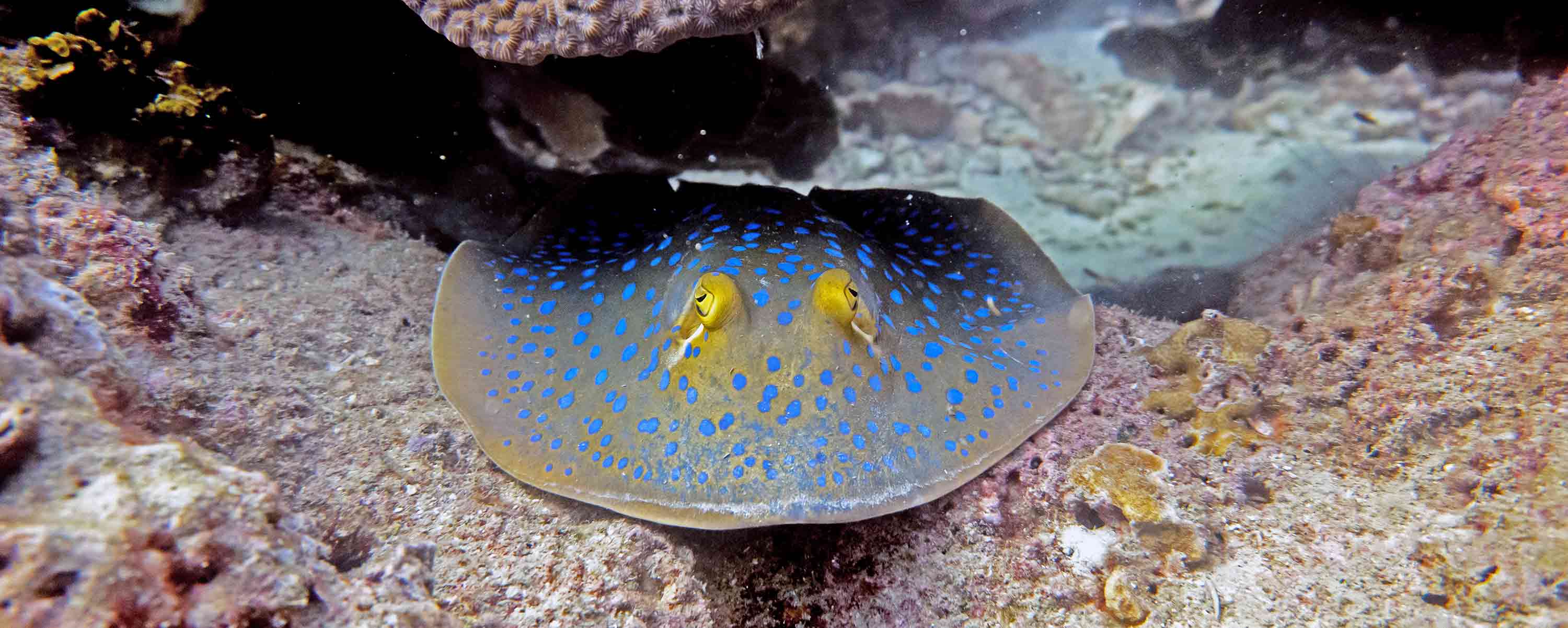
6. Blue-Spotted Stingrays
Small stingrays may be seen resting on sandy areas or moving close to the bottom. Their bright blue spots make them among the most visually distinctive rays found around tropical reefs.
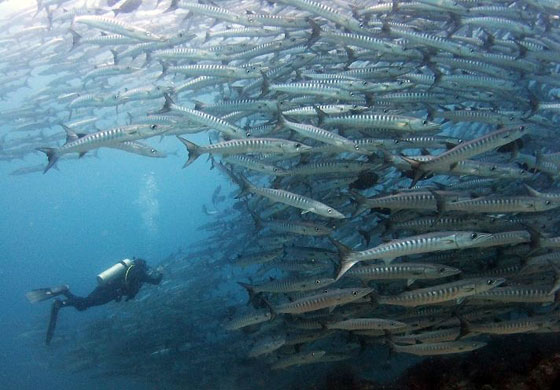
7. Barracuda
Barracuda can appear individually or in schools. Large groups moving together are particularly impressive around open reef and pinnacle environments.
8. Anemonefish
Anemonefish live in close association with sea anemones. The relationship provides shelter for the fish and is one of the classic examples of reef symbiosis familiar to visitors.
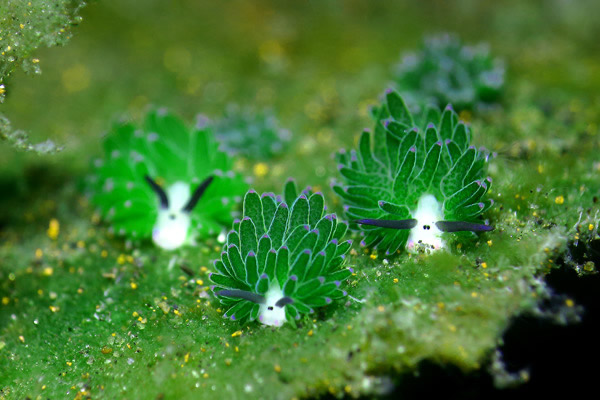
9. Nudibranchs
Nudibranchs are colourful sea slugs that reward close observation. Many species are only a few centimetres long, and their colours can serve as camouflage, warning signals or both.
For more detail, read our Koh Tao marine-life guide and related species profiles.
10. Whale Sharks
Whale sharks are occasional visitors rather than a guaranteed sighting. They are the largest fish in the world and feed by filtering plankton and other small organisms from the water.
Any encounter should be treated as a privilege, with the animal given room to move naturally.
Marine Life Is More Than a Checklist
Species lists are useful, but a reef is an ecosystem rather than a collection of individual attractions. Fish, invertebrates, corals, algae and larger animals interact through feeding, competition and habitat use.
Learning these relationships can make even common species more interesting.
Responsible Wildlife Viewing
Visitors should avoid touching, chasing, feeding or manipulating marine animals. Natural behaviour is more valuable to observe than a forced photograph.
Big Blue’s marine conservation courses cover fish identification, coral ecology, sharks, turtles and other aspects of tropical marine biology.
Discovering Koh Tao’s Marine Life
The best marine-life experiences often come from slowing down and noticing what is already present. A turtle may attract the biggest reaction, but a tiny nudibranch, a pair of butterflyfish or a moray hidden in the reef can be just as interesting once you know what you are looking at.
Explore more species in our Koh Tao marine-life guide.
