


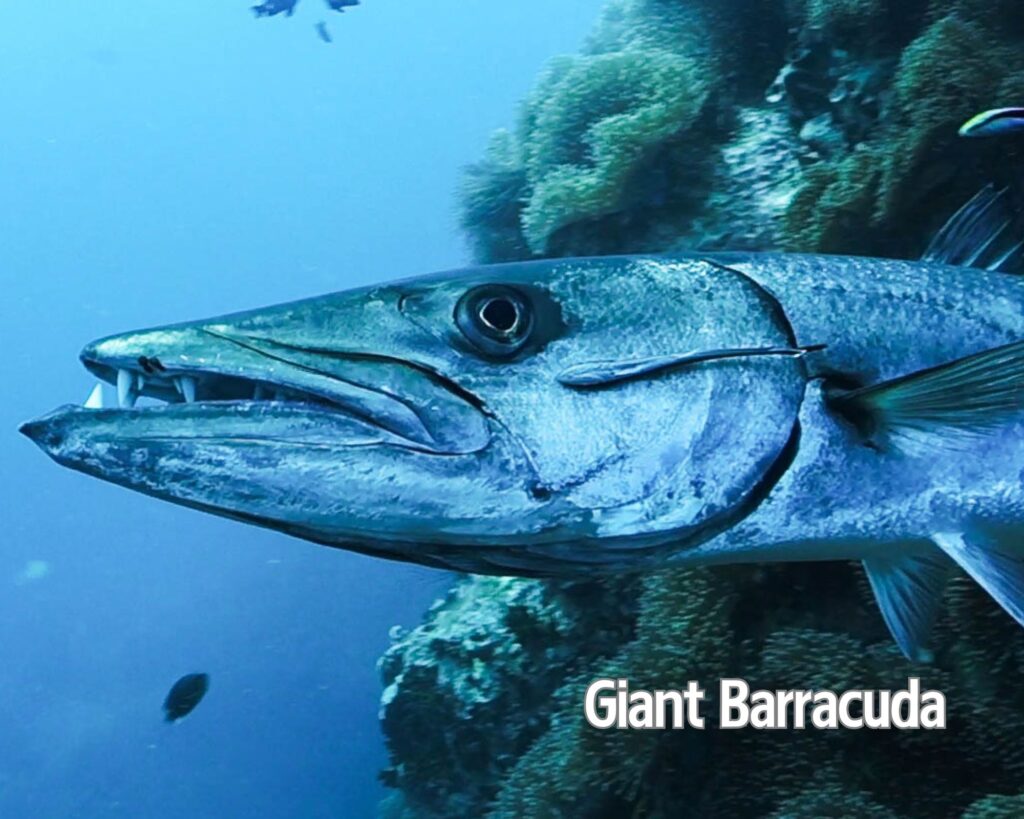
Great Barracuda
Scientific name Sphyraena barracuda
The great barracuda is a large, predatory fish found in subtropical oceans all over the planet. It is a common species of barracuda and usually the type that is associated with the entire family of fish. They live in a variety of areas with a lower depth limit of about 110 metres.
Great barracuda are large fish. Adult specimens are usually between 60-100 cm in length and weigh between 2.5-9.0kg. Some exceptionally large examples can be as long as 2 meters and over 40kg.
Great barracuda are solitary animals and spend their time in open seas. They are incredible predators and use their stealth and speed to ambush and kill their prey. The short bursts of speed they use to overrun their prey have been recorded to be up to 43km/h.
Barracuda spawn between April and October and females can release anywhere between 5,000-30,000 eggs in each spawning.
Great barracuda have a reputation for being aggressive and attacking swimmers and divers. They do also hunt by scavenging and may mistake humans for larger predators, following them in hopes of eating the remains of their prey. While people have been bitten by barracuda, these incidents are very rare and are usually a case of mistaken identity. A shiny ring glinting in slightly murky water may look like a tasty snack to a hungry barracuda.
Find Great Barracuda at...
Divemaster's tip
Use your torch on a night dive to help these incredible predators find their dinner. If you notice a Great barracuda following you, find a rabbitfish and light it up with your torch. The barracuda will often strike and eat right in front of you!
What do they eat?
Great barracuda are at the top of their food chain so they can eat pretty much anything they want, which is usually any fish smaller than they are. Sometimes it can be tricky to hold on to a particularly large catch, which is why barracuda have certain teeth that point backwards to prevent their slippery prey from escaping their jaws.
