


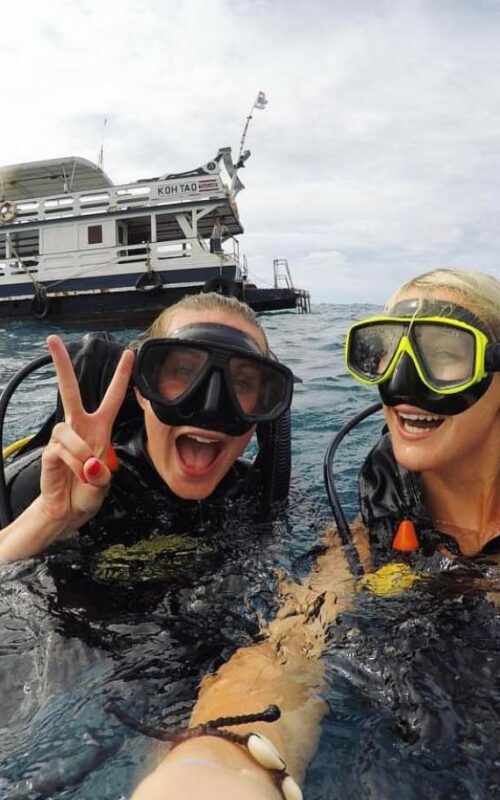
Here’s a peculiar thing about the human condition: we spend roughly a third of our lives asleep, another third working jobs we tolerate at best, and if we’re extraordinarily lucky, a final third doing things that make us forget we’re going to die someday. Now, what if I told you there’s a place where categories two and three merge into one glorious, sun-drenched, underwater reality? Welcome to the Divemaster course Koh Tao experience, where “going to work” means strapping on a tank and descending into the Gulf of Thailand.
The Island That Turns Recreational Divers Into Professionals
Koh Tao—which translates rather charmingly to “Turtle Island”—sits in the Gulf of Thailand like a diving certification factory disguised as a tropical paradise. It’s the sort of place where more people speak in bar pressures and nitrogen narcosis than discuss the weather, and where the question “What do you do?” is inevitably answered with “I’m doing my Divemaster.”
But here’s where things get interesting, and where most dive schools get it spectacularly wrong.
The Inconvenient Truth About Divemaster Training
Let me be blunt in that distinctly uncomfortable way that makes people shift in their seats: not all Divemaster courses are created equal. In fact, most are little more than glorified extended holidays with a certificate at the end. Big Blue Diving—one of Koh Tao’s most established operations with over 30 years of history—has the audacity to say something revolutionary: if you’re looking for cheap diving, go elsewhere.
Shocking, isn’t it? A dive school turning away business. But there’s method in this madness.
What Makes a Proper Divemaster Course in Koh Tao?
The Divemaster training Koh Tao experience at Big Blue spans 6-8 weeks and costs 40,000 baht (roughly £900 or $1,100). Before you recoil at the duration, consider this: would you trust a surgeon who’d crammed their training into a fortnight? Then why trust your diving career—and the lives of future divers—to anything less thorough?
The Prerequisites: No Shortcuts Allowed
To begin your journey, you’ll need:
- Rescue Diver certification (because knowing how to save someone is rather important)
- Valid CPR and First Aid (issued within the last two years)
- 40+ logged dives (though if you’re a few short, they offer discounted dives at 750 baht to get you there)
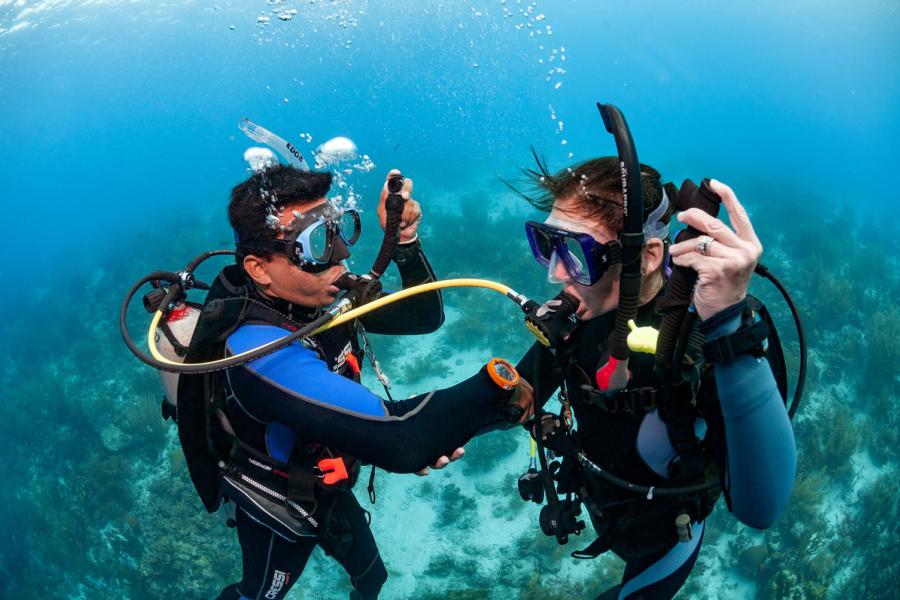 It’s worth noting that if these prerequisites seem intimidating, you’re probably not ready. And that’s perfectly fine—the ocean will still be there when you are.
The SSI Divemaster Course Structure: Theory Meets Reality
The training consists of two main components that sound deceptively simple: Dive Guide and Science of Diving. The former teaches you to lead certified divers professionally; the latter ensures you understand why we don’t all explode when we surface (a concern that, frankly, deserves more attention than it gets).
What You’ll Actually Learn
The curriculum reads like a university degree for underwater enthusiasts:
Practical Workshops:
- Deep diving (where the interesting stuff lives)
- Navigation (because GPS doesn’t work underwater, surprisingly)
- Night diving (considerably more thrilling than it sounds)
- Guiding and briefing (talking underwater is harder than you’d think)
- Buoyancy control (the art of not looking like a flailing starfish)
- Skills circuits and stress rescue scenarios
- Snorkeling instruction (yes, you’ll become a qualified snorkeling instructor too)
Theoretical Lectures:
- Physics (why we don’t implode under pressure)
- Decompression theory (why we must resist the urge to rocket to the surface)
- Physiology (what nitrogen does to your body, none of it good)
- Ecology (because understanding what you’re looking at enhances the experience)
- Equipment knowledge (tanks are not just “those metal things”)
- Dive shop management, retail sales, and marketing (because divemasters need to eat)
The Big Blue Difference: Why Location Matters
Koh Tao boasts over 25 dive sites within a 20-minute boat ride, ranging from shallow coral gardens perfect for training to deeper sites like Chumphon Pinnacle and Sail Rock. During your Divemaster course Koh Tao experience, you’ll enjoy unlimited fun diving—meaning you can dive these sites repeatedly, learning every boulder, every swim-through, every resident turtle by name (metaphorically speaking, though some people do actually name them).
The Technical Diving Advantage
Here’s something that sets Big Blue apart: they maintain an active technical diving department at Big Blue Tech. This means access to sidemount, twinset, and decompression diving courses at discounted rates. It’s rather like learning to drive in a regular car but having access to a Formula One track whenever you fancy it. The optional specialties available include:
- Deep diving
- Wreck diving
- Enriched Air Nitrox
- Solo diving
- DPV (Diver Propulsion Vehicle—underwater scooters, essentially)
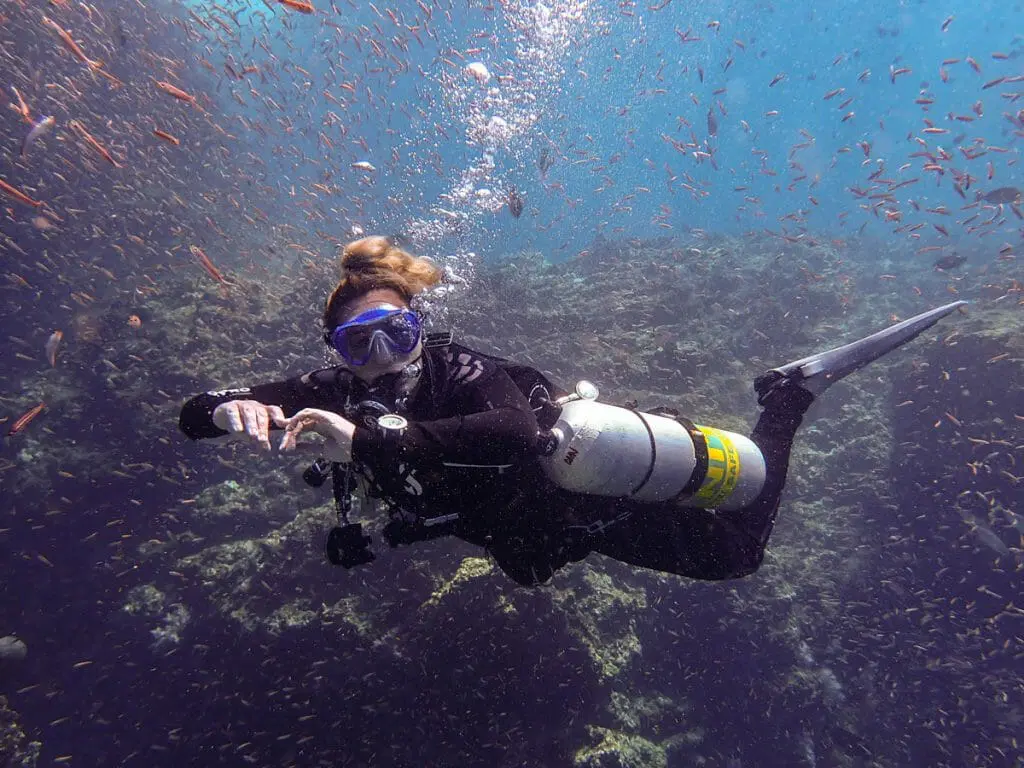 They even organize “Tech days” specifically for Divemasters in training, offering a glimpse into the advanced diving world without commitment.
The Employment Reality: From Student to Staff
Here’s the bit that should make your ears perk up: Big Blue employs exclusively from within their own training program. Every full-time Divemaster on staff graduated from their DMT course. This isn’t a corporate mission statement; it’s actual policy backed by instructor mentors Fiona Anne and Martin Lindquist, who provide ongoing support, one-on-one coaching, and social events (because networking shouldn’t feel like a root canal).
Think about the implications: you’re not just paying for a course; you’re auditioning for a job. Suddenly that 6-8 week timeline makes more sense, doesn’t it?
The Investment: What 40,000 Baht Actually Buys
Your course fee includes:
- All course materials
- One year of SSI fees
- Unlimited fun diving throughout your training
- Use of all diving equipment except personal items (computer, DSMB, knife, compass, whistle)
- Access to world-class facilities and purpose-built boats
- Professional discount (15%) on any equipment you purchase
The items you’ll need to own—dive computer, delayed surface marker buoy, cutting tool, compass, and whistle—are SSI requirements, not arbitrary upsells. Think of them as the underwater equivalent of a carpenter’s tool belt.
Small Classes, Big Difference
Big Blue maintains small group sizes, which in diving education is the difference between learning and merely surviving. You’ll shadow various instructors and divemasters, assist on courses from basic diver through rescue levels, and practice guiding on actual dive boats with real customers (supervised, naturally—they’re not complete sadists).
The rolling academic program means you can start anytime, rather than waiting for arbitrary start dates that might not align with your life.
The Koh Tao Lifestyle: What Nobody Tells You
Living on Koh Tao during your Divemaster training creates an interesting paradox: you’ll be working harder than you have in years while simultaneously feeling like you’re on permanent vacation. The island measures roughly 21 square kilometers—small enough that you’ll know every beach, restaurant, and dive shop within a week, large enough that you won’t go mad from claustrophobia.
 The diving community here operates like a small village where everyone knows everyone’s certification level, favorite dive site, and that embarrassing incident with the sea urchin. This networking proves invaluable when job hunting post-certification.
Environmental Responsibility: More Than Lip Service
Big Blue’s commitment to sustainable diving practices and marine conservation isn’t just marketing fluff. Koh Tao’s reefs have suffered from decades of intensive diving tourism, and responsible operators now actively participate in conservation efforts. As a Divemaster in training, you’ll learn not just how to guide dives, but how to protect the environments that provide your livelihood.
This includes proper buoyancy control to avoid reef damage, removing marine debris, participating in coral restoration projects, and educating divers about responsible underwater behavior. It’s the sort of thing that sounds tedious until you realize you’re literally helping preserve ecosystems for future generations—at which point it becomes rather moving.
The Career Trajectory: Beyond Divemaster
The SSI Divemaster certification serves as your entry point into professional diving, but it’s hardly the endpoint. Most divemasters progress to instructor certifications, specializing in technical diving, underwater photography instruction, or marine biology education. Some transition into liveaboard operations, expedition diving, or dive resort management.
The truly ambitious pursue careers in underwater cinematography, marine research, or commercial diving. The point being: your Divemaster certification is your passport, not your destination.
Is the Divemaster Course Koh Tao Experience Right for You?
Here’s the uncomfortable question: are you actually ready for this?
Not financially—that’s straightforward maths. But mentally and emotionally. Can you commit 6-8 weeks to intensive training? Are you comfortable with the reality that professional diving involves early mornings, equipment maintenance, challenging customers, and occasional boredom between the moments of wonder?
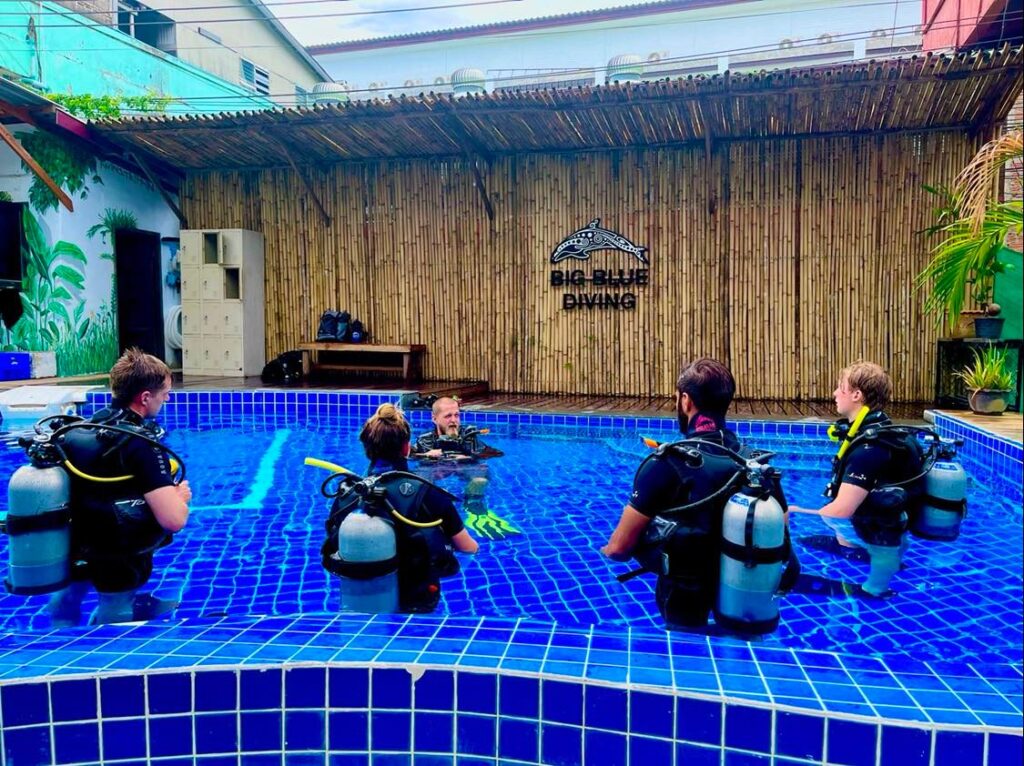 If you’re nodding yes, then the Divemaster course Koh Tao at Big Blue might be exactly what you need. If you’re hesitating, perhaps you should gain more diving experience first. There’s no shame in waiting until you’re genuinely ready.
The Application Process: Simpler Than You’d Think
To enroll, you simply contact Big Blue Diving, verify your prerequisites, and arrange your start date. They’ll help you obtain any missing qualifications, provide accommodation recommendations (Koh Tao offers everything from basic bungalows to boutique resorts), and answer the inevitable flood of questions that accompanies any major life decision.
Final Thoughts: On Choosing Careers Over Jobs
The remarkable thing about pursuing Divemaster training isn’t the diving itself—though that’s spectacular—but rather the realization that work and passion needn’t be separate categories. Not everyone should become a professional diver; the industry is competitive, pay can be modest (especially initially), and the lifestyle isn’t for everyone.
But if you’re the sort of person who feels more alive underwater than on land, who can’t stop boring friends with dive stories, who checks tide charts and weather forecasts compulsively, then perhaps—just perhaps—you’ve found your calling.
The Divemaster course Koh Tao experience at Big Blue isn’t the easiest path, nor the cheapest, nor the quickest. But it might be the best. And in matters of career and calling, “best” tends to matter more than we’d like to admit.
Frequently Asked Questions About Divemaster Training in Koh Tao
How long does the Divemaster course take? The minimum recommended duration is 6-8 weeks for comprehensive training, though this varies based on prior experience and individual progress.
How much does a Divemaster course cost in Thailand? At Big Blue, the course costs 40,000 baht (approximately £900/$1,100), including materials, SSI fees, and unlimited diving throughout training.
What are the prerequisites for Divemaster training? You need Rescue Diver certification, valid CPR/First Aid certification (within 2 years), and a minimum of 40 logged dives.
Can I work as a Divemaster after certification? Yes, immediately upon certification. Big Blue specifically employs from within their training program, offering direct employment opportunities.
Is Koh Tao good for Divemaster training? Koh Tao is one of the world’s premier locations for dive training, offering 25+ diverse dive sites, warm waters, good visibility, and a concentrated diving community.
What’s included in the Divemaster course fee? Course materials, one year SSI fees, unlimited fun diving, use of all equipment (except personal items like computers and SMBs), and access to professional facilities.
How many dives do you do during Divemaster training? With unlimited fun diving throughout the 6-8 week course, most candidates complete 80-120+ dives, depending on conditions and personal commitment.
What can Divemasters do professionally? Guide certified divers, assist on training courses, work on dive boats and resorts, teach snorkeling courses, and progress toward instructor certifications.
Do I need my own equipment for the Divemaster course? You must own a dive computer, DSMB, cutting tool, compass, and whistle (SSI requirements). All other equipment is provided, and professional discounts apply to purchases.
What’s the difference between PADI and SSI Divemaster? Both are internationally recognized professional certifications. SSI emphasizes digital learning and often has slightly different curriculum structures, but both lead to equivalent professional qualifications.
Meta Description:
