


Choosing a dive centre is one of the most important decisions you will make when planning a scuba course or diving holiday in Koh Tao.
The island has options for complete beginners, certified divers, technical divers and people training for a professional career. However, the right operation for one person may not be the right choice for another.
A good decision should be based on more than price, social-media photographs or a claim to be the “best” school on the island. You should consider the instructors, group sizes, training environment, equipment, boats, safety procedures and whether the centre’s approach suits the way you want to dive.
This guide explains how to choose a dive centre in Koh Tao and gives you ten practical areas to check before making a booking.
1. Check the Training Agency and Professional Status
A dive centre offering certification courses should be affiliated with a recognised scuba training agency and use instructors who hold the appropriate active professional qualifications.
Major training organisations publish standards covering subjects such as instructor qualifications, course content, skill requirements and maximum training depths. Agency affiliation gives a course a recognised structure, but it should not be the only factor in your decision.
Ask the centre:
- Which training agency will issue the certification?
- Is the business an authorised training centre?
- Is the instructor active and qualified to teach the selected programme?
- Will the certification be recorded digitally?
- Are learning materials and certification fees included?
You can use the official agency website or app to look up participating training centres and verify professional credentials where that service is available.
Big Blue is an SSI training operation, and you can find general information about SSI certification and its worldwide training-centre network on the official SSI website.
2. Ask Who Will Actually Teach or Guide You
The name of the dive school matters less during a course than the person who will be working directly with you.
An experienced instructor should be able to explain skills clearly, recognise when a student is uncomfortable and adjust the pace without compromising the required standards.
Before booking, ask:
- Who is likely to teach the course?
- How long have they been instructing?
- Which languages do they teach in?
- Do they regularly teach beginners or the specific specialty you are taking?
- Can the centre accommodate learning difficulties, anxiety or limited water confidence?
If you are booking guided dives rather than a course, ask about the guide’s knowledge of Koh Tao’s dive sites and whether groups are organised by experience level.
A short conversation with the centre can often tell you whether the communication style feels patient, clear and professional.
3. Confirm the Group Size
Group size affects how much individual attention an instructor or guide can provide.
Smaller groups can be especially valuable for:
- Complete beginners
- Nervous students
- Younger divers
- People who need additional skill practice
- Underwater photographers
- Divers returning after a long break
Do not rely on vague wording such as “small groups.” Ask for the actual maximum number of students or divers assigned to each instructor or guide.
You should also ask what happens if:
- One student needs more time in the pool
- Someone cannot complete a required skill
- Divers in the group have very different experience levels
- The minimum number of participants is not reached
Big Blue’s current SSI Open Water Diver course, for example, lists a maximum of four students per instructor.
4. Look at the Training Environment
Beginner students should have an appropriate controlled environment in which to practise before entering the sea.
This may be a purpose-built swimming pool or another confined-water location that provides pool-like conditions. The important point is that students have enough space and time to learn foundational skills without unnecessary waves, currents or distractions.
Ask:
- Where will the first practical session take place?
- Is there shallow water where students can stand?
- How much time is allocated to confined-water training?
- What happens if someone needs additional practice?
- Are classrooms or suitable briefing areas available?
Be cautious if a schedule appears to compress theory, equipment orientation and practical training into an unrealistically short period.
Big Blue’s Koh Tao dive school includes a dedicated training pool, classrooms and equipment-preparation areas in Sairee.
5. Ask How the Equipment Is Maintained
Rental equipment does not need to look new, but it should be appropriate, correctly fitted and properly maintained.
A responsible operation should have procedures for inspecting and servicing:
- Regulators
- Buoyancy control devices
- Scuba cylinders and valves
- Pressure and depth gauges
- Weight systems
- Masks, fins and exposure protection
Useful questions include:
- Who services the rental equipment?
- How are faults reported and recorded?
- Can equipment be changed if the fit is unsuitable?
- Are different wetsuit and equipment sizes available?
- Are cylinders filled and tested according to the applicable requirements?
Do not judge equipment entirely by cosmetic wear. A slightly faded buoyancy control device may still be well maintained, while newer-looking equipment is not automatically safer.
The most useful signs are organised storage, clear pre-dive checks and staff who respond properly when a diver reports a problem.
6. Examine the Boats and Dive Operation
If your course or fun dives operate from a boat, consider more than the vessel’s size or appearance.
The boat should provide an organised environment for assembling equipment, receiving briefings, entering the water and returning safely after the dive.
Ask about:
- The number of divers normally carried
- Space for assembling and securing equipment
- Entry and exit arrangements
- Toilets and shaded areas
- Drinking water
- Communication equipment
- Medical kits and emergency oxygen
- Procedures for accounting for divers
- How the crew responds to changing weather or sea conditions
Certified divers should also ask how dive sites are selected and whether the centre separates new divers from more experienced groups when appropriate.
You can view Big Blue’s current fleet and boat information on its Koh Tao dive-boats page.
7. Ask About Safety and Emergency Procedures
A professional dive centre should be prepared for problems even though serious incidents are uncommon.
Emergency planning should cover more than simply owning a first-aid kit. Ask whether:
- Emergency oxygen is available at the dive site or aboard the boat
- Staff are trained to administer oxygen and first aid
- The operation has a written emergency action plan
- Communication with shore is available
- There is a procedure for evacuating an injured diver
- Divers are counted before the boat leaves each site
- Medical questionnaires and course prerequisites are checked
- Weather and sea conditions are assessed before departure
A centre should be able to answer these questions calmly and clearly. Safety information should not be treated as an inconvenience or dismissed with a joke.
Divers Alert Network recommends that operators have emergency oxygen available and maintain an emergency plan appropriate to their location and access to medical assistance. You can read more in the DAN emergency-action planning guidance.
8. Compare What the Price Actually Includes
The lowest advertised price is not always the least expensive option once additional charges are included.
Before comparing prices, ask for a complete list of what is provided.
This may include:
- Digital or printed learning materials
- Certification and registration fees
- Rental scuba equipment
- Wetsuit, mask and fins
- Boat transport
- Insurance during the course or dives
- Pool or confined-water sessions
- Additional practice sessions
- Accommodation or transfers
- Marine-park or other local fees
For guided diving, confirm whether the quoted amount includes equipment and whether the price changes according to the number of dives booked.
For courses, compare the full programme rather than only the headline cost. Two similarly named courses may use different schedules, group sizes or inclusions.
Current Big Blue prices and inclusions are shown on the relevant scuba diving course pages rather than repeated in this guide.
9. Review the Environmental Practices
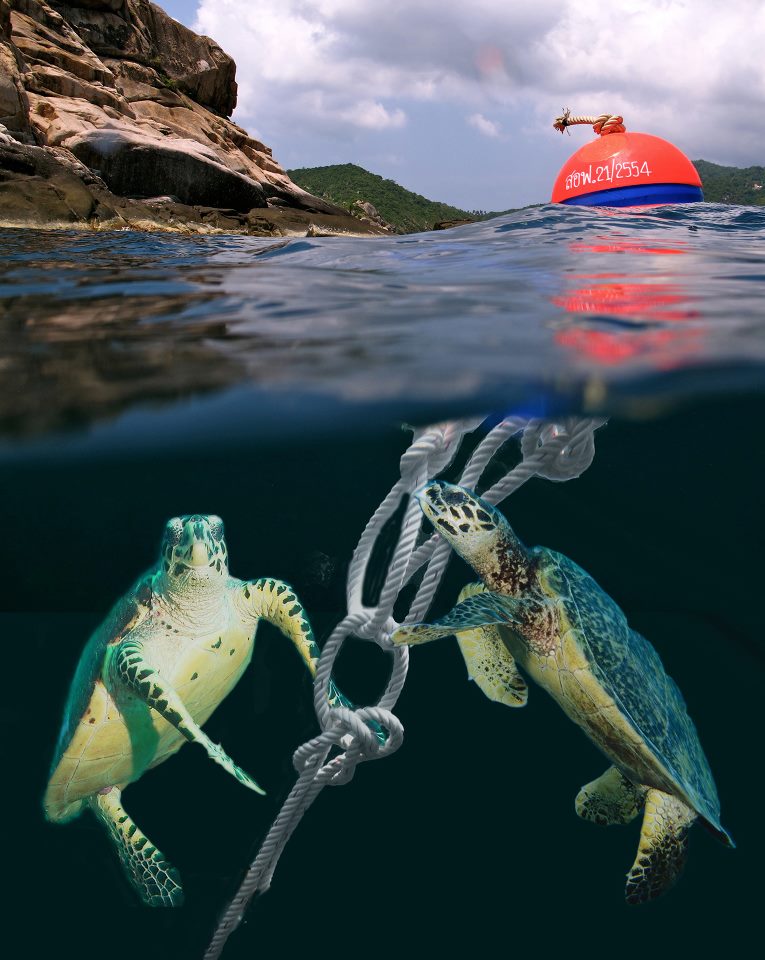
A dive centre depends on healthy reefs and marine life, so environmental responsibility should be visible in its daily operation rather than limited to marketing language.
Look for practical measures such as:
- Buoyancy guidance before reef dives
- Clear instructions not to touch or chase marine animals
- Responsible mooring and anchoring procedures
- Waste-reduction and refill facilities
- Reef-safe cleaning and operational practices
- Staff education in marine ecology
- Participation in credible monitoring or conservation work
- Honest communication about wildlife encounters
Be cautious of centres that promote guaranteed encounters with wild animals or encourage divers to approach, touch or manipulate marine life for photographs.
Independent programmes such as Green Fins provide useful examples of internationally recognised environmental standards for marine-tourism operators.
Big Blue also offers marine conservation courses in Koh Tao covering coral, fish, sharks, sea turtles and research skills.
10. Read Reviews Carefully and Speak to the Centre
Online reviews can be useful, but the average score alone does not tell you whether a dive centre suits your needs.
Read a selection of recent reviews and look for recurring comments about:
- Instructor patience and communication
- Equipment condition
- Group organisation
- Safety briefings
- Boat comfort
- How problems or schedule changes were handled
- Whether the course matched its advertised inclusions
Pay attention to how the business responds to criticism. A professional response should address the issue rather than attack the reviewer or disclose unnecessary personal details.
After reading reviews, contact the centre directly. The quality of the reply can reveal a great deal.
Ask a few specific questions and check whether the response:
- Answers what you actually asked
- Explains the course or dive schedule clearly
- Discloses inclusions and restrictions
- Avoids pressuring you into an immediate booking
- Takes medical or safety questions seriously
Questions to Ask Before Booking
The following checklist can help you compare several dive schools consistently:
- Which training agency and certification will I receive?
- Who will teach or guide me, and in which language?
- What is the maximum group size?
- Where does confined-water training take place?
- How much time is allowed for skill practice?
- How is the rental equipment inspected and serviced?
- What safety and emergency equipment is carried?
- What exactly is included in the price?
- What happens if weather disrupts the schedule?
- What happens if I need more time or cannot complete the course?
- How are divers grouped for fun dives?
- What environmental standards does the operation follow?
Red Flags to Watch For
Consider looking elsewhere if a dive centre:
- Will not explain group sizes or course inclusions
- Dismisses questions about safety equipment
- Cannot explain where practical training takes place
- Pressures you to conceal information on a medical questionnaire
- Guarantees particular wildlife sightings
- Encourages touching coral or marine animals
- Appears disorganised when assigning equipment or groups
- Will not allow enough time to practise required skills
- Uses price as its only explanation of why you should book
One concern does not always prove that an operation is unsafe, but unclear or defensive answers should prompt further questions.
Does the Training Agency Matter?
 Recognised training agencies use structured programmes and issue certifications accepted by dive operations around the world.
For most beginners, the quality of the instructor, training environment and time available for practice will have a greater effect on the course experience than the logo on the certification card.
Choose a recognised programme, but also choose an instructor and school whose communication, schedule and teaching style suit you.
Should You Choose the Cheapest Dive Centre?
Price is a reasonable consideration, particularly during a longer trip, but it should be compared alongside what the programme includes.
A lower price may be completely legitimate. It may also reflect larger groups, fewer facilities, excluded equipment or a different schedule.
A higher price does not automatically guarantee better instruction either.
The useful question is not:
“Which dive centre is cheapest?”
It is:
“Which operation provides the training, supervision, facilities and service I need at a clearly explained price?”
Choosing a Dive Centre for Fun Diving
Certified divers should assess slightly different factors from beginner students.
Ask:
- How are dive groups organised?
- What is the normal guide-to-diver ratio?
- Which sites suit your certification and experience?
- Are deeper or more challenging sites available?
- Is a refresher required after a period of inactivity?
- Can the centre accommodate photographers or slower-paced groups?
- How are dive-site changes communicated?
If you have not dived recently, completing a scuba refresher in Koh Tao may be more appropriate than joining a regular group immediately.
Big Blue’s current certified-diver options are listed on the guided fun-diving page.
Choosing a School for Professional Training
A Divemaster or instructor programme requires more research than a short recreational course.
Professional candidates should ask about:
- The experience of the training team
- The amount of structured instruction provided
- Opportunities to observe or assist real courses
- Mentoring and feedback
- Required materials and additional costs
- Internship duties and working expectations
- Accommodation and visa considerations
- Career support after qualification
Do not choose a professional programme purely because it offers unlimited diving or a social atmosphere. The quality of education, supervision and practical experience should remain central.
You can compare Big Blue’s Divemaster and instructor-training pathways separately from its recreational courses.
How Big Blue Meets These Selection Criteria
This guide is intended to help you compare dive centres objectively, including Big Blue.
Big Blue Diving has operated in Koh Tao since 1991 and currently provides recreational, professional, technical and marine-conservation training from Sairee. Its facilities include a training pool, classrooms, equipment areas and an in-house fleet of dive boats.
The operation also publishes course-specific group sizes, schedules, inclusions and prerequisites on its product pages.
You can review the details on our Koh Tao dive school page and then compare them against the same questions you would ask any other operation.
Choose the Dive Centre That Suits You
The right dive centre in Koh Tao should provide clear information, suitable training, maintained equipment and an environment in which you feel comfortable asking questions.
Before booking, confirm:
- The instructor and group size
- The training and dive schedule
- The equipment and boat arrangements
- The emergency procedures
- The complete price and inclusions
- The centre’s environmental practices
Do not be afraid to contact more than one school. A responsible dive centre should be happy to explain how it operates and give you enough information to make your own decision.
Explore Big Blue’s scuba diving courses in Koh Tao or contact the team with questions about training, guided diving or course selection.

I love how Koh Tao is described as a dive haven for all levels of divers. One thing I’ve noticed is that while many dive centers here emphasize safety, it’s also crucial to consider the instructor’s experience and how comfortable they make you feel underwater. That’s often the difference between a good dive and a great one!