


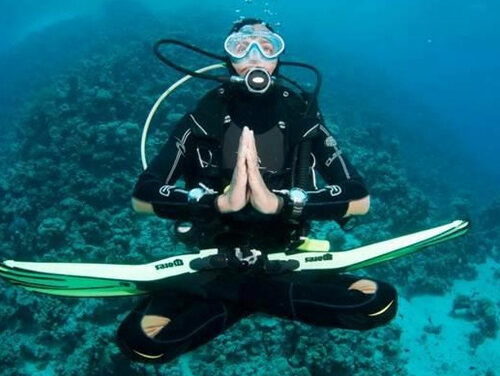
Good buoyancy control is one of the foundations of comfortable, responsible scuba diving. It affects how easily a certified diver can maintain a stable position, how much unnecessary effort is used and how effectively fragile reef habitats are protected.
For newly certified divers, buoyancy is also a skill that develops over time. Completing an entry-level course provides a foundation, but experience, coaching and familiarity with different equipment all influence how consistent that control becomes.
This article explains why scuba buoyancy control matters and when additional professional guidance may be useful. It is not a substitute for in-water instruction: diving skills should be developed with an appropriately qualified professional and within the limits of a diver’s certification and experience.
What Does Neutral Buoyancy Mean?
In simple terms, neutral buoyancy describes a state in which a diver is not rapidly sinking or rising. Stable positioning is important because it reduces unnecessary movement and helps the diver maintain awareness of depth, surroundings and the rest of the group.
Practical buoyancy is influenced by several changing factors, including equipment configuration, exposure protection, cylinder characteristics, depth and the environment. That is one reason buoyancy can feel different from one trip to another.
Why Buoyancy Control Matters for Safety
Divers Alert Network identifies poor buoyancy control as a common diving problem because unexpected changes in depth can affect the intended dive profile and gas consumption. In more serious situations, a loss of control can contribute to an unsafe ascent.
A diver who is struggling to remain stable may also become distracted from other important tasks such as monitoring instruments, staying aware of a buddy or following the dive plan.
For further safety information, read Divers Alert Network’s guidance on buoyancy control.
Better Buoyancy Can Make Diving More Comfortable
A diver who constantly has to correct position may use more physical effort than someone who is stable and relaxed. Extra movement can make a dive feel tiring and can contribute to faster breathing.
With experience, many certified divers find that maintaining position requires less conscious attention. That leaves more mental space for awareness, communication and simply observing the underwater environment.
Buoyancy and Reef Protection
Buoyancy is also an important conservation skill. Coral reefs are living ecosystems, and accidental contact can damage delicate organisms.
Divers who can maintain a stable position are better able to keep an appropriate distance from coral, avoid disturbing the seabed and observe marine life without making unnecessary contact with the environment.
This becomes especially important when looking closely at small animals or taking photographs. The aim should always be to observe without touching, standing on or manipulating marine life.
You can explore more about reef ecology in Big Blue’s Koh Tao marine-life guide.
Why Equipment Changes Can Affect Buoyancy
A diver may feel well balanced on one trip and noticeably different on another. Changes in wetsuit thickness, cylinder type, rental equipment and accessories can all alter how equipment behaves in the water.
Divers Alert Network notes that changes in equipment can affect buoyancy requirements. If unfamiliar equipment or conditions make a diver uncomfortable, the safest response is to pause and seek help from the appropriately qualified professional supervising the activity.
Breathing, Relaxation and Body Awareness
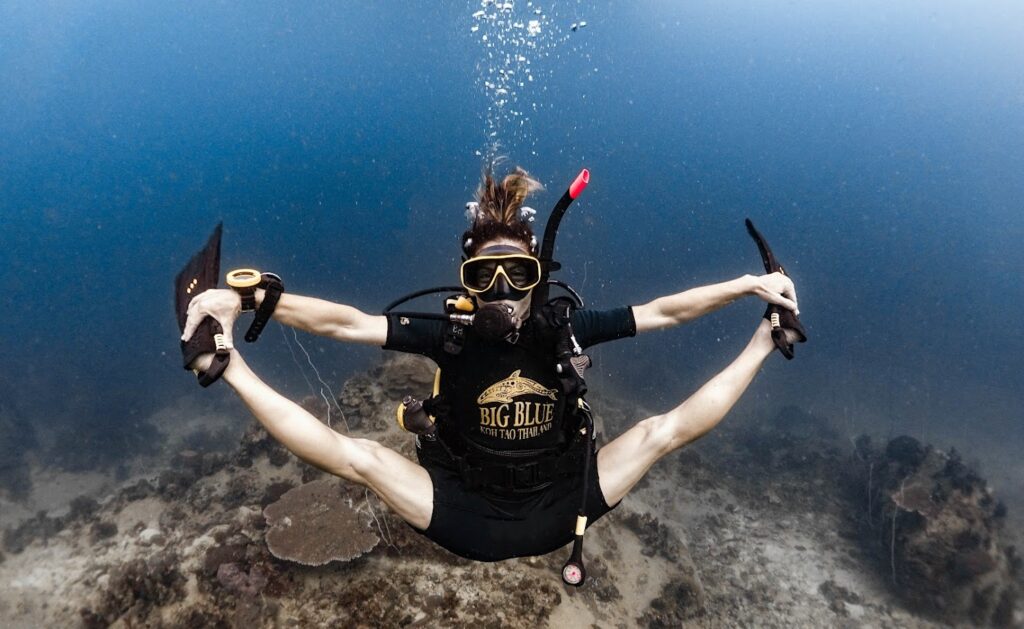
Breathing and buoyancy are naturally connected because lung volume changes during normal inhalation and exhalation. Entry-level training introduces this relationship as part of learning to remain controlled underwater.
The goal is not to use unusual breathing patterns or to hold the breath. Scuba divers are taught to breathe continuously and normally. Anyone who feels unable to remain controlled should stop and ask for professional guidance rather than experimenting independently.
Why Experience Helps
Many new divers discover that buoyancy requires less conscious thought after they have completed more supervised dives. Repetition can make equipment handling, body awareness and general underwater movement feel more familiar.
However, simply accumulating dives does not guarantee that inefficient habits will disappear. Feedback from a qualified instructor can be useful because an experienced observer may notice issues that are difficult for a diver to identify alone.
Signs That More Professional Guidance May Be Useful
A certified diver may benefit from additional coaching if they regularly:
- Have difficulty maintaining a stable depth
- Feel unusually tired after otherwise straightforward dives
- Need repeated assistance to maintain position
- Make accidental contact with the seabed or reef
- Feel uncomfortable when using unfamiliar equipment
- Struggle to remain stable while observing marine life or taking photographs
These are not reasons to be embarrassed. They are simply signs that structured feedback may help make future dives more comfortable and controlled.
Buoyancy and Underwater Photography
Photography can make buoyancy weaknesses more obvious because attention is divided between the camera, the subject and the surrounding environment.
Responsible photography means protecting the reef comes before the image. If a diver cannot remain stable without touching coral or other marine life, the photograph should wait.
Good Buoyancy Is Part of Responsible Diving
Strong buoyancy control supports three things that matter on almost every dive: safety, comfort and environmental responsibility.
It helps divers maintain the intended position, reduces unnecessary effort and makes it easier to observe reefs and marine life without accidental contact.
Most importantly, it is a skill that develops through proper training and experience rather than something every diver should expect to perfect immediately after certification.
