


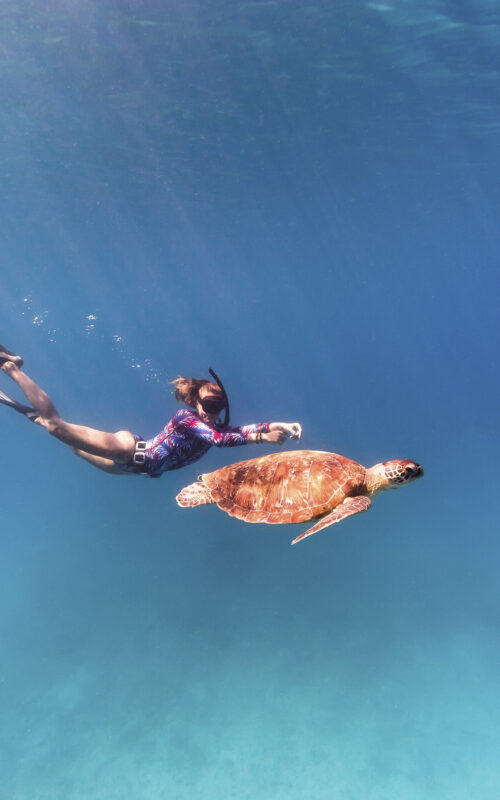
Green sea turtles are among the most recognisable marine animals found around tropical reefs. Koh Tao is home to sea turtles throughout the year, and seeing one moving slowly across a reef or resting near coral is a memorable experience for divers and snorkellers alike.
Understanding their biology also helps explain why respectful wildlife encounters and healthy coastal ecosystems matter.
What Is a Green Sea Turtle?
The green sea turtle, Chelonia mydas, is one of the world’s seven species of sea turtle. Despite its name, the shell is not necessarily green. The name refers to the greenish colour of the fat beneath the shell, historically linked to the turtle’s largely herbivorous adult diet.
Adults are generally associated with warm tropical and subtropical waters, where they feed in seagrass areas and around reef habitats.
How Can You Recognise a Green Sea Turtle?
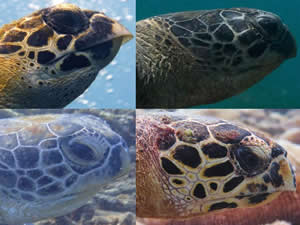
Green turtles have a smooth, rounded shell and a relatively small head compared with some other sea turtle species. The shell colour can vary considerably between individuals, with patterns of brown, olive, grey and lighter markings.
One useful identification feature is the arrangement of scales on the head, although accurate species identification should be based on several characteristics rather than colour alone.
What Do Green Turtles Eat?
Young green turtles have a more varied diet, while adults are best known for feeding heavily on seagrass and algae. This makes them important participants in coastal ecosystems.
Grazing can influence the structure of seagrass meadows and the growth of algae, linking turtles to the wider health of shallow marine habitats.
Where Might Turtles Be Seen Around Koh Tao?
Sea turtles move between feeding, resting and other habitats, so sightings cannot be guaranteed at any particular site. They may be encountered around reef edges, shallow bays and other areas where suitable food and resting habitat are available.
Big Blue’s Koh Tao marine-life guide introduces other animals found around the island, while the dive-sites guide describes the variety of underwater environments around Koh Tao.
Why Do Turtles Need Space?
Wild turtles need to be able to surface, feed, rest and move without being surrounded or chased. A calm encounter is better for the animal and usually gives observers a more natural view of its behaviour.
Responsible wildlife viewing means allowing the turtle to choose where it goes rather than attempting to control the encounter for a photograph.
Threats Facing Green Sea Turtles
Sea turtles face a combination of pressures throughout their lives, including:
- Loss or disturbance of nesting beaches
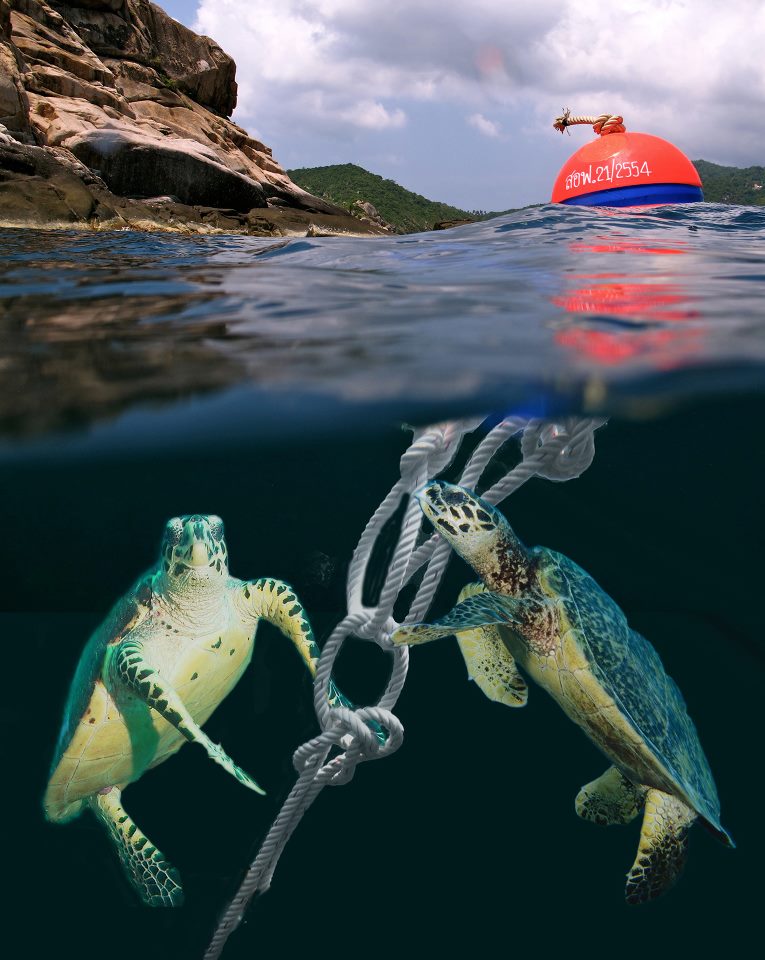
- Entanglement and accidental capture in fishing gear
- Marine debris and plastic pollution
- Boat strikes
- Changes to feeding habitats
- Climate-related impacts on nesting beaches and ocean ecosystems
Because turtles travel across large areas, their conservation depends on action in many different places rather than at a single reef.
Why Healthy Reefs and Seagrass Matter
Protecting turtles also means protecting the habitats they rely on. Coral reefs, seagrass meadows and coastal areas support food webs and provide feeding or resting habitat for many species.
Visitors can learn more about these connections through Big Blue’s marine conservation courses in Koh Tao.
Green Turtles and Hawksbill Turtles
Koh Tao can also be visited by hawksbill turtles. Hawksbills tend to have a narrower, more pointed beak and overlapping shell plates that can create a more serrated appearance around the edge of the shell.
Learning the differences between species makes sightings more interesting and improves the quality of citizen-science observations and photographs.

Sea Turtle Conservation
International conservation organisations monitor sea turtle populations and threats around the world. The IUCN Red List is a useful source for conservation assessments, while local monitoring projects can provide more detailed information about individual regions.
Seeing a Turtle in Koh Tao
A turtle sighting is best treated as an opportunity to observe a wild animal behaving naturally. Give it room, avoid blocking its movement and enjoy the encounter without trying to change what it is doing.
For more species profiles and information about the animals found around the island, visit our Koh Tao marine-life guide.
