


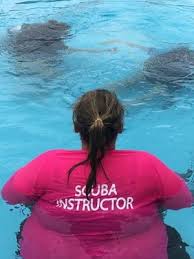
A question that we’re asked often here at Big Blue by those of you looking to do their first ever dives is how long will be spent underwater? In this blog I will try my best to answer that question, but of course there are many different factors that will influence the length of time that you will be diving for which we will look at in more detail now.
Rate of Breathing
Obviously the faster you breathe, the shorter your dive will be – after all the time underwater is dictated by the amount of air in the diving cylinder, or ‘tank’ as I’ll be calling it here. So how can I extend this ‘bottom time’? Don’t bloody breathe so fast, that’s how. Slow, relaxed breaths are the way forward here – exactly how you’re breathing right now.
Size of the diver
Are you a big fatty wobbler, a 2 metre giant or a muscle-bound hero like me? Then you’re going to breathe more than smaller humans, as you’re carrying a lot of extra weight compared to those damn slim people. It takes more energy and effort to move this mass around you see, which takes a lot of oxygen – it’s like they’re working out every time they move. I don’t recommend chopping of a limb before diving of course, but I imagine it would help.
Conditions underwater
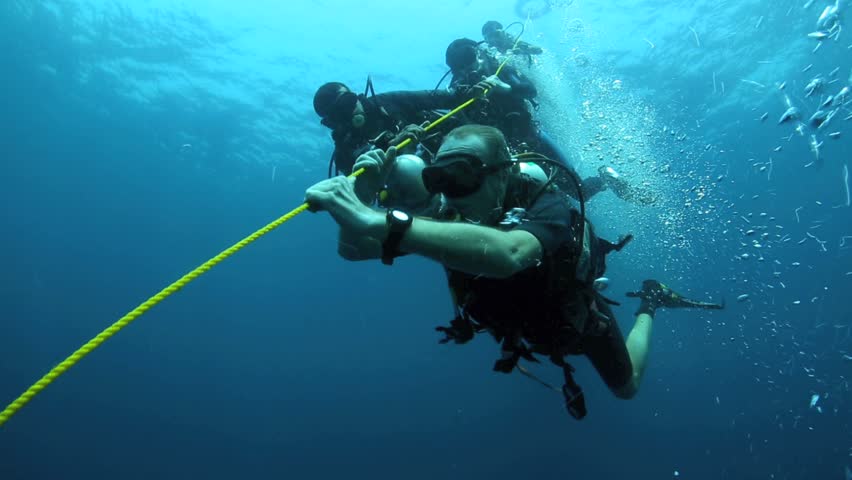
We all dream of diving in crystal clear waters, gliding effortlessly through the water free of currents without a care in the world, but in reality it isn’t always like that. There’s always a chance that the visibility may drop, which may make the diver a little nervous which often results in faster breathing. Tidal movement may also introduce an ocean current, which will put the diver in a situation where they need to kick harder, thus increasing the rate the diver is breathing – both of which will shorten the amount of time the diver gets underwater.
Excitement of diver
A number of situations will make your heart beat faster, including how excited you are. The faster your heart beats, the faster it can get more blood and oxygen to your muscles, leading to…you guessed it – shorter dive times due to the increased rate of breathing that goes hand in hand with heart rate. So we shouldn’t get excited?? That may be difficult especially when diving for the first time ever, but with practice a diver is able to control this more, and thus have a longer dive. Calm and collected is what we aim for when diving!
Depth of dive
Simply put, the length of your dive directly depends on the depth of the dive. The deeper you dive, the denser gases become (the more molecules are required to fill a given flexible space). Double the pressure (at 10m seawater) and it takes twice as much gas to fill your lungs with each breath. Triple the pressure (at 20m seawater) and it takes three times as much. Thus, the deeper you dive, the faster you consume air from your scuba tanks no matter how much air it holds to start with.

The size of the tank
There are varying sizes of tanks used for diving, and the size you’re given will affect how much air it can contain and how long the tank will last at a given depth. The most common you’ll encounter especially here in Thailand are 12 litre, 200 bar scuba tanks (or thereabouts). In Europe it’s also common to have the larger 15 litre tanks, which should add about 10 minutes to your dive time from the standard 12 litre cylinders.
So how long does a scuba tank last? The average beginner diver’s air consumption in calm waters runs a tank close to empty in around 1 hour at 10m depth (compared to just a few minutes at 40m). Professional and very experienced divers can usually double this time through breathing/buoyancy control and by minimizing the amount of movement underwater.
Quality of instruction
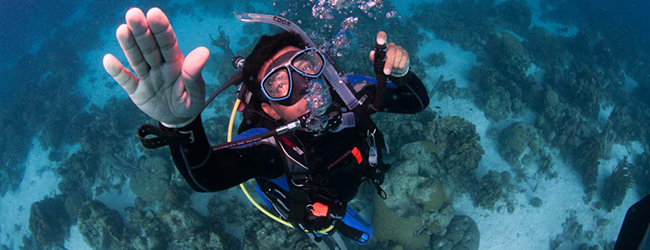
I’ll never forget my first ever diving experience, where my bitter old instructor shouted at us poor students repeatedly, got really angry when we messed up and generally just acted like an arse the whole time. He didn’t exactly inspire any of us new divers, or calm us when we faced a challenging part of the course – to be honest it seemed to us that we were wasting his ‘valuable’ time and he’d rather be anywhere else but in the classroom with us.
When we were descending on the first ever ocean dive we were (no doubt due to the poor quality instruction we’d received) pretty bloody nervous, and felt ill-prepared for what we were about to encounter. Nervous divers, like the excited diver we talked about earlier, breathe a lot more hence have shorter dives – we lasted about 30 minutes only.
Would a better instructor have been able to allay our fears, resulting in calmer divers? You’re damn right they would have!
Diving technique
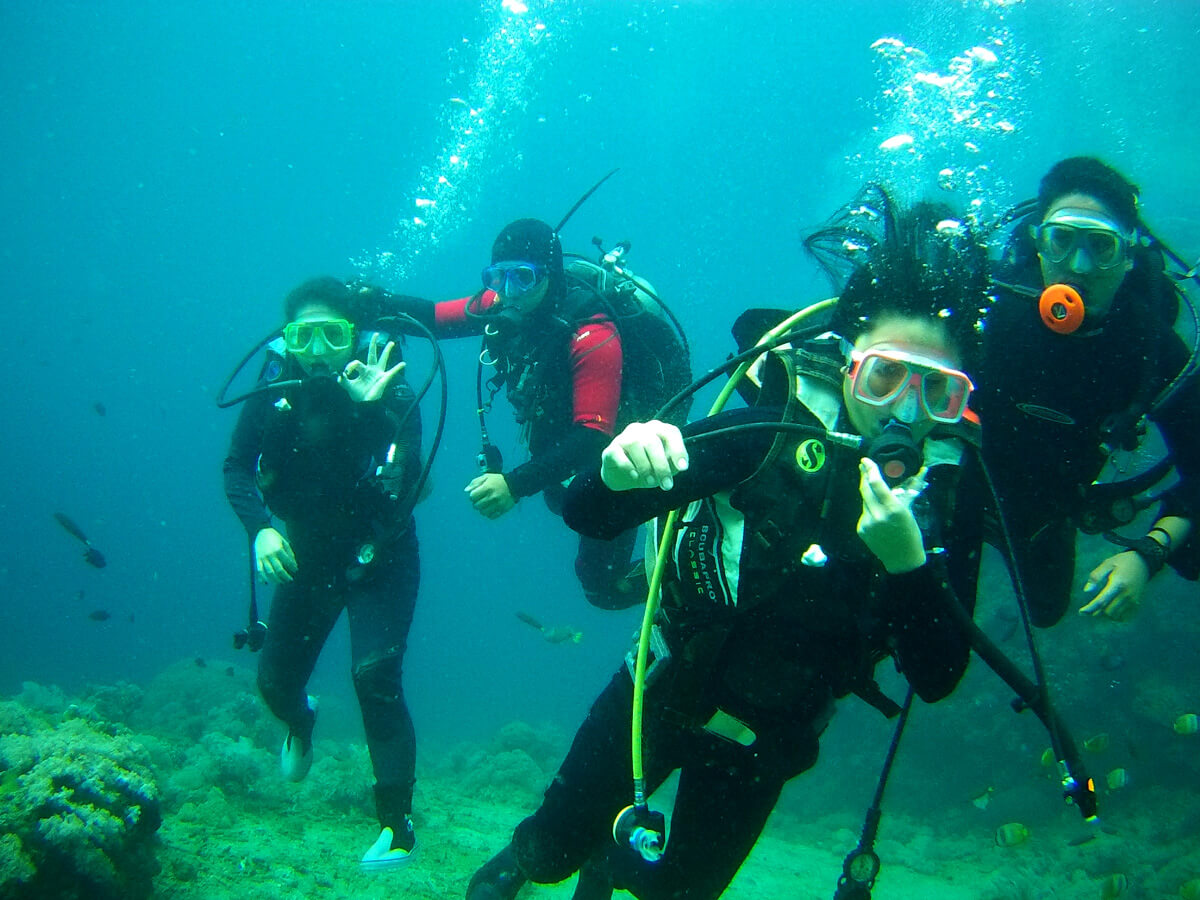
Anyone with a bit of diving experience can tell you that there are a lot of divers out there with poor technique. Divers will bump into you, constantly adjust their buoyancy, flap their hands around, kick as hard and fast as they can and often ruin the dive for everyone else in their group by getting low on air very quickly indeed due to all this excessive movement. The solution can often be quite simple; take the ‘Perfect Buoyancy’ dive offered at your local dive centre, or go for the SSI or PADI Advanced Diver course where the instructor will really work on taking your diving technique to the next level, often leading to a large increase in bottom time for the newly competent diver.
Speed of the Diver
When you’re active, your breathing can increase up to about 40-60 times a minute to cope with the extra demand on your body. The delivery of oxygen to your muscles also speeds up, so they can do their job efficiently. This is all well and good if you’re a professional athlete, but whilst diving we want to try to maximize the time spent underwater by breathing slowly and calmly as much as is possible!
The key to this is to dive really slowwwwwwwwwwwwly. Less movement as we know leads to less oxygen being pumped to the muscles by the heart, so the breathing rate will also slow right down in turn. We don’t want to be kicking constantly or darting around the dive site, aim to slowly glide around underwater as much as possible and you’ll be amazed just how much longer your dives become!
Taking all of these things into account, what can we conclude?
The short answer is about 45 minutes!
