


Porcupine Fish
Scientific name Diodon liturosus
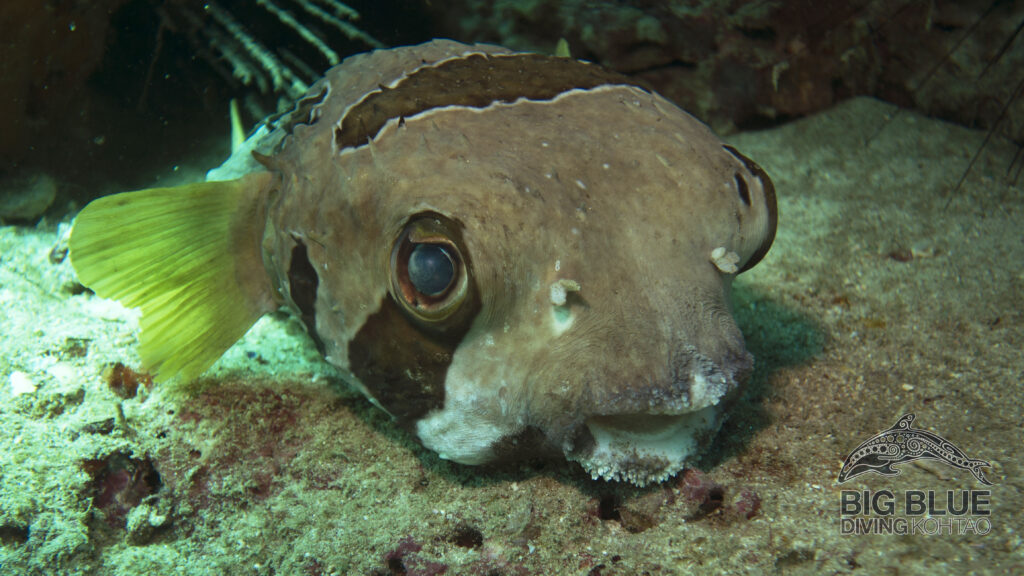
The Blotched Porcupinefish is one of the reef’s most characterful residents. Growing up to around 65 cm in length, they have a rounded body covered in large dark blotches and long sharp spines that lie flat against the body — until needed.
They’re easily recognised by their big eyes, slightly comical expression and slow, hovering movement. During the day, they’re usually found tucked under ledges, inside small caves or beneath coral overhangs. At night, they become far more active, cruising slowly across the reef in search of food.
When threatened, they can inflate their body by gulping water, causing their spines to stand erect and making them appear dramatically larger. It’s a highly effective defence mechanism that discourages predators instantly.
Blotched Porcupinefish are important reef predators, feeding on hard-shelled invertebrates such as crabs, sea urchins and molluscs. Their powerful beak-like teeth are designed for crushing shells, helping to regulate invertebrate populations and maintain reef balance.
They are harmless to divers and often surprisingly tolerant of a calm approach. Night dives around Koh Tao offer the best chance to see them actively swimming rather than hiding.
Seeing one inflate (which divers should never provoke) is impressive — but watching them calmly hover under a ledge, eyes following you curiously, is just as memorable.
Find Porcupine Fish at...
Divemaster's tip
Look under overhangs and inside small swim-throughs during daytime dives. On night dives, scan open sandy areas and reef edges — they often venture out to feed.
Maintain good buoyancy and never attempt to make them inflate. Inflation is a stress response and should only happen naturally if they feel genuinely threatened.
What do they eat?
Blotched Porcupinefish feed primarily on crabs, sea urchins, molluscs and other hard-shelled invertebrates. Their fused teeth form a strong beak capable of crushing shells with ease.
They are mainly nocturnal hunters, using their large eyes to navigate and locate prey after dark around Koh Tao’s reefs.
