Whale Shark
Scientific name Rhincodon Typus
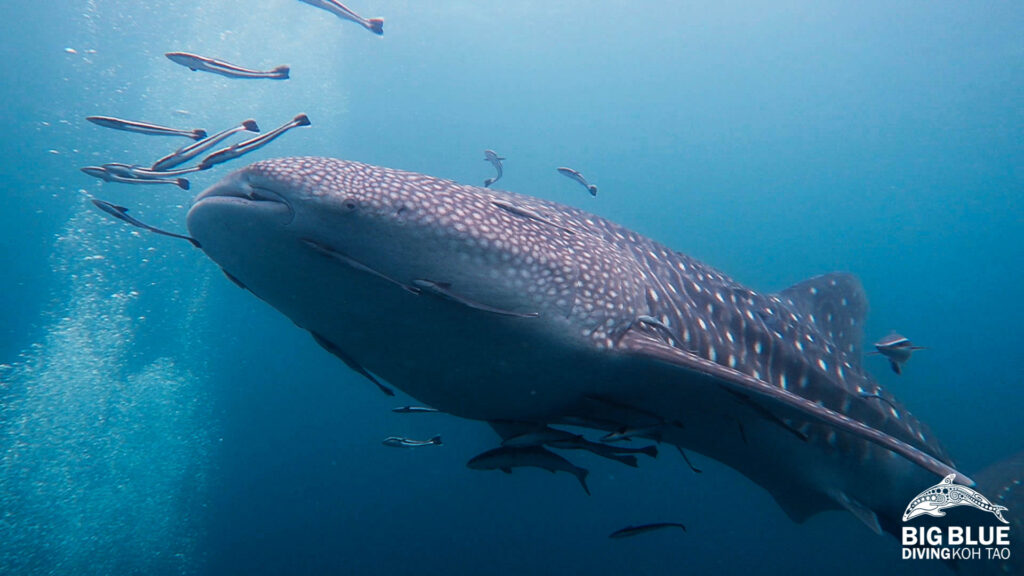
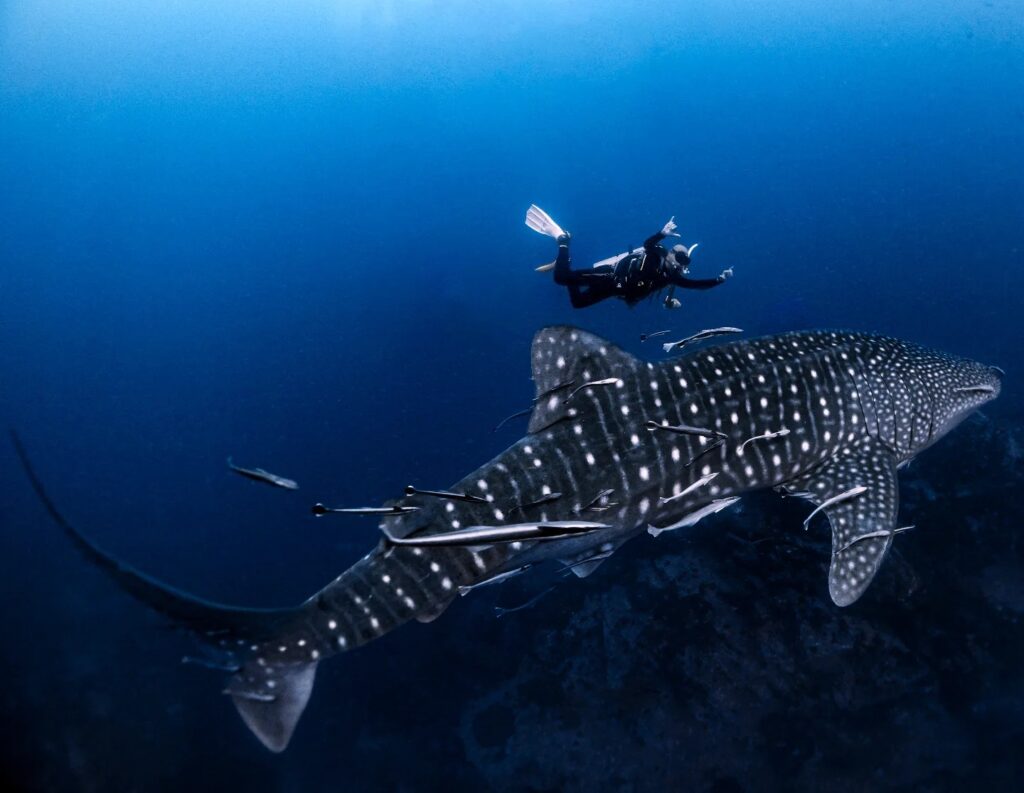
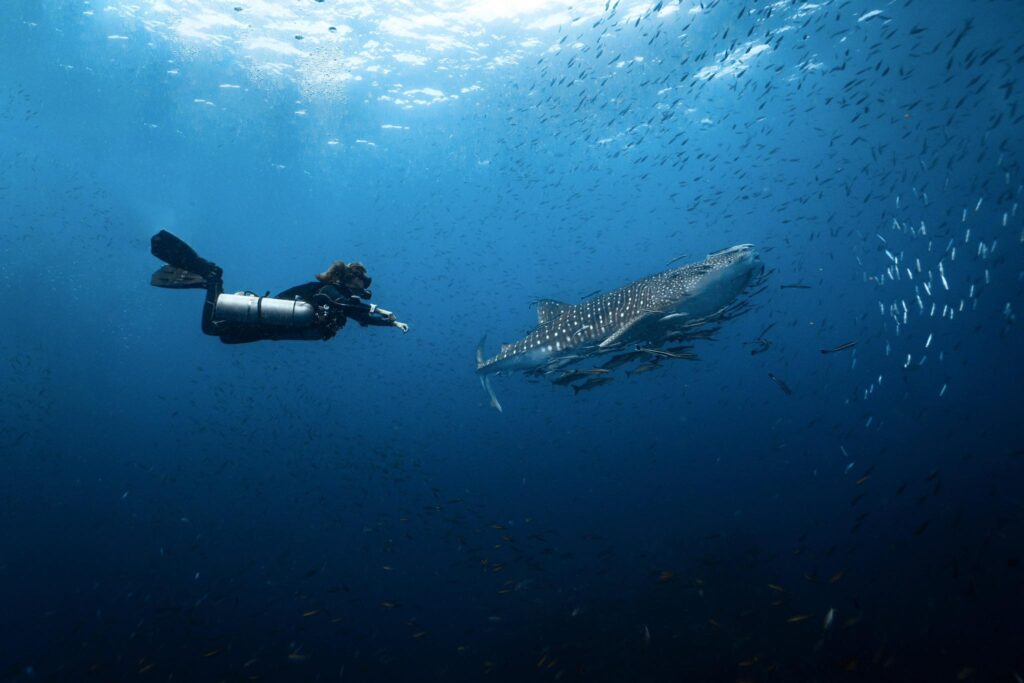
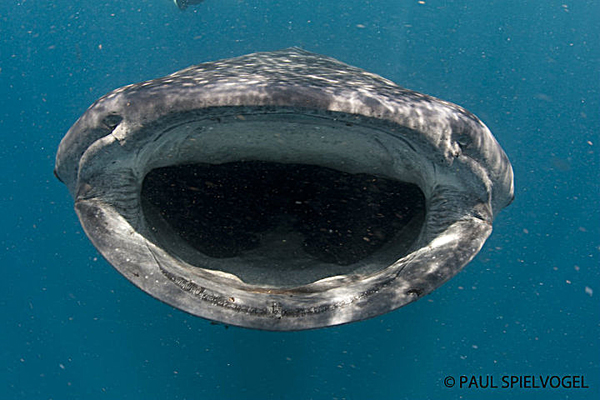
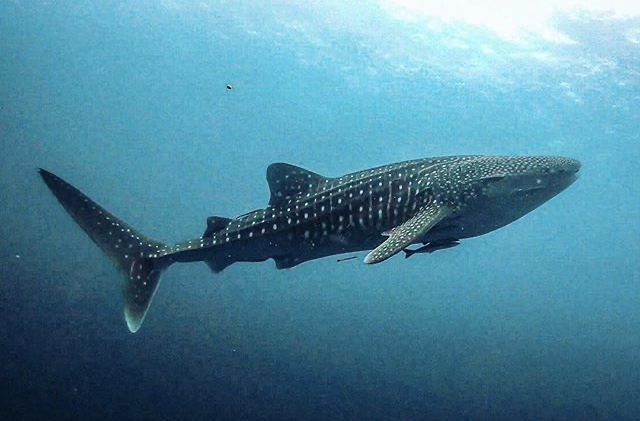
The Whale shark is the largest fish in the ocean, growing up to 12 meters long — and sometimes even bigger. Despite the name, it’s not a whale — it’s a shark. But unlike most sharks, it’s a filter feeder, meaning it feeds on plankton, fish eggs and tiny marine organisms. They’re easily recognised by their enormous mouths and beautiful white spot patterns. Each individual has a unique pattern, like a fingerprint, which researchers use for identification. A rare and unforgettable sighting around Koh Tao. They move slowly and calmly, often allowing divers to observe them as they cruise effortlessly through the blue. When a Whale Shark shows up, the whole energy of the dive changes.
Whale Sharks play an important role in ocean ecosystems by regulating plankton populations, by cycling nutrients through different ocean zones, by acting as an indicator species for ocean health and because they travel long distances between feeding grounds, they help connect marine ecosystems across regions. Their very presence often signals healthy, productive waters.
Whale Sharks are completely harmless to divers. They have tiny teeth and do not hunt large prey. Their mouths may look enormous, but they are designed purely for filtering microscopic food. The only “danger” is getting too excited and swimming too close.
A Whale Shark sighting is one of the most sought-after experiences in diving. They are listed as endangered globally due to fishing pressure and boat strikes, which makes every encounter even more meaningful. For many divers, seeing a Whale Shark is the moment that turns them from someone who “tries diving” into someone who becomes hooked for life.
Find Whale Shark at...
Divemaster's tip
Whale Sharks are most commonly seen at offshore pinnacles and deeper dive sites like Sail Rock, Chumphon Pinnacle and Southwest Pinnacle. Keep your eyes in the blue — not just on the reef. Whale Sharks often appear suddenly from deeper water and pass through mid-water rather than sticking close to coral. Peak sightings often happen during plankton blooms or seasonal changes, but they are unpredictable — which makes every sighting even more special. Keep your eyes in the blue — not just on the reef. Whale Sharks often appear suddenly from deeper water and pass through mid-water rather than sticking close to coral.
What do they eat?
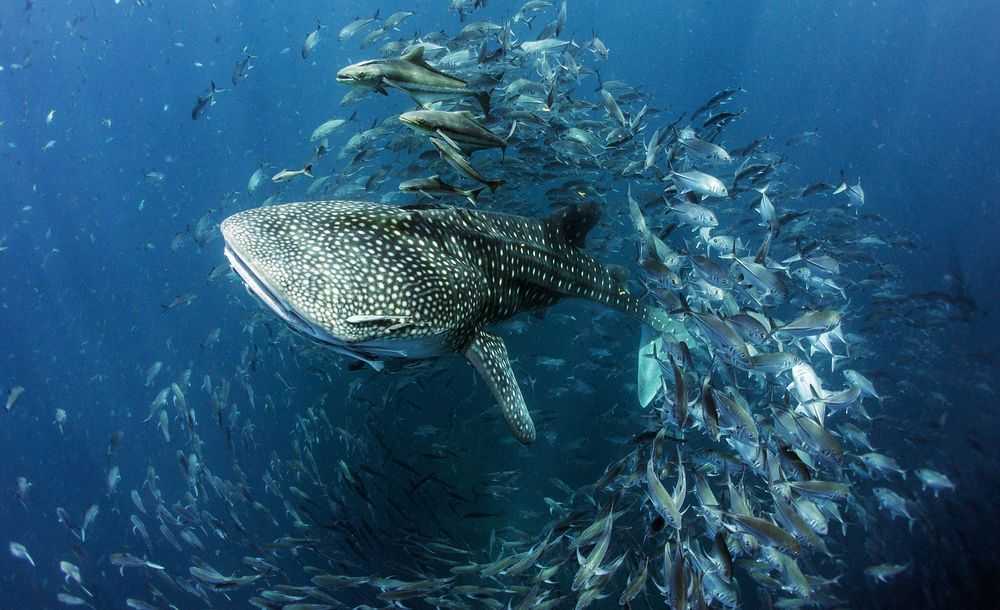
Whale Sharks feed primarily on plankton, fish eggs, krill, small schooling fish and tiny crustaceans. They swim slowly with their mouths open, filtering water through specialised gill rakers that trap food while expelling water. Around Koh Tao, sightings often coincide with plankton blooms or spawning events when fish eggs are abundant in the water column. When food is concentrated, Whale Sharks may circle vertically or feed near the surface.
Gallery