


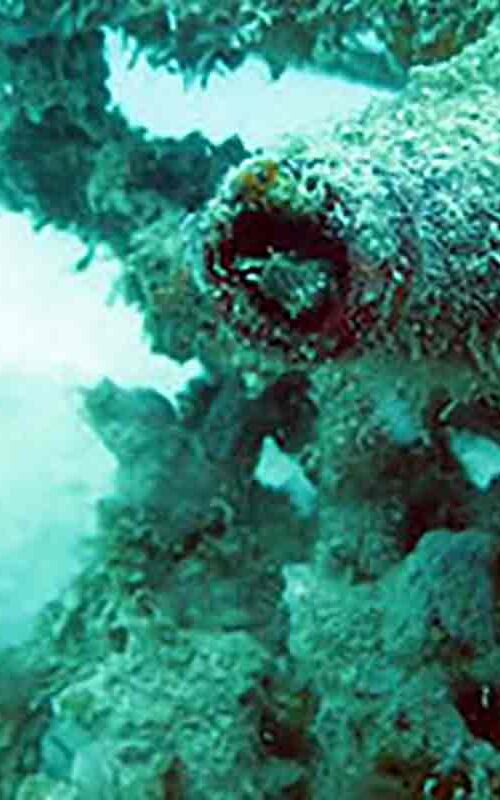
Over recent years there have been an influx in artificial reefs on Koh Tao, in many different shapes and sizes and made from many different types of materials. When you live at the bottom of the ocean, it can be tough finding an ideal home. From sandy burrows to rocky shelters there’s a lot of choice but its hard choosing just the right one. Throw in another option of a glass bottle, well now you’re talking.
Glass, like plastic, is a very common material that is discarded daily. Despite its ability to be recycled, a lot of trash documented all over the world is glass bottles. Regularly on ocean cleanups, we come across glass bottles in large numbers under the water.
Now although they are considered trash we don’t remove them from the ocean, once they’ve been submerged and here’s why. In spite of them being a used item we could recycle, the actual efforts to recycle a glass bottle once it’s found its way to the bottom of the sea is very costly. It comes down to the time and resources recycling takes as, opposed to being able to just re-use an item for something else.
And that is what the sea does with glass bottles, once discarded you will often find marine life hiding inside from Goby’s, to octopus. A shiny glass bottle can make a very attractive new pad, somewhere that you can really call a home.
So come join us at Big Blue Conservation as we visit some artificial reefs on Koh Tao and see how we have incorporated some of the abandoned glass bottles into some of the structures we have designed. These bottles have now become homes to many different organisms, including blennies.
Blennies are generally small fish, with elongated bodies and relatively large eyes and mouths. Their dorsal fins are often continuous and long; the pelvic fins typically have a single embedded spine and are short and slender, situated before the pectoral fins. The tail fin is rounded. The blunt heads of a blenny often possess elaborate whisker-like structures called cirri. They spend much of their time on or near the seafloor; many are reclusive and may burrow in sandy substrates or inhabit crevices in reefs, the lower stretches of rivers, or even empty shells.
So why not come join us with our in house Marine Biologist on one of either our underwater cleanups, or visits to the artificial reef.
