


The Life of a Whale Shark:
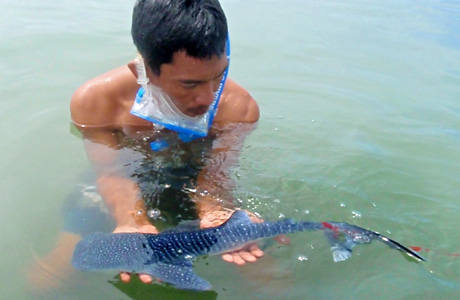
The life of a whale shark is a fascinating journey that spans several decades. These magnificent creatures can grow up to 40 feet in length and weigh as much as 20 tons. Despite their impressive size, whale sharks are filter feeders, primarily consuming plankton and small fish. Their unique mouths, resembling a cavernous portal, allow them to passively filter massive amounts of water, extracting the microscopic organisms that sustain their enormous bodies.
Whale sharks are found in warm tropical waters across the globe, including the Indian and Pacific Oceans. They have been observed in several coastal regions, but their migratory behavior is still not completely understood. It is believed that they undertake long-distance journeys in search of food, mating opportunities, and suitable environments for their offspring.
Whale sharks are known to undertake extensive migrations, with their movements spanning vast distances. Their migratory patterns often follow the availability of food sources, which are influenced by ocean currents and seasonal variations. Research suggests that these gentle giants move between feeding areas and breeding grounds, encompassing both coastal and pelagic environments. One prominent migratory hotspot for whale sharks is the Gulf of Thailand, which includes the picturesque island of Koh Tao. During specific months of the year, these magnificent creatures frequent the waters surrounding Koh Tao, making it a sought-after destination for divers seeking an encounter with these gentle giants.
Dive with a Whale Shark on Koh Tao:
The allure of diving with whale sharks draws enthusiasts and marine lovers to Thailand’s shores. While no guarantees can be made regarding wildlife encounters, the likelihood of diving with whale sharks around Koh Tao and other regions in Thailand is relatively high during specific periods. The prime season for whale shark sightings in the Gulf of Thailand generally falls between February and May, with occasional encounters extending into June. At Koh Tao dive sites like Sail Rock, Chumphon Pinnacle and Southwest Pinnacle whale shark sightings can be fairly frequent often for days at a time and sometimes with more than one whale shark present. During these months, whale sharks are known to congregate in the waters surrounding Koh Tao, drawn by the abundant plankton blooms resulting from the monsoon currents. The warm waters, coupled with ideal feeding conditions, and tidal motions effected by the full moon make this period highly conducive to memorable encounters.
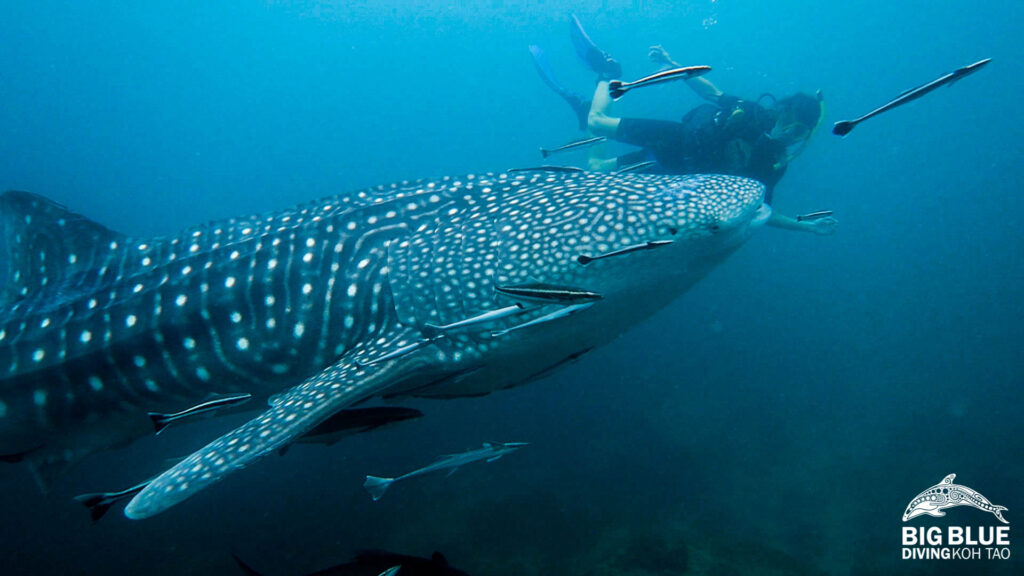
Diving centers around Koh Tao often organize special excursions focused on spotting whale sharks. These trips, led by experienced guides, provide divers with an opportunity to witness these magnificent creatures up close while adhering to responsible and ethical practices. It’s important to note that diving with whale sharks requires respect for their natural behavior and a commitment to maintaining a safe distance to avoid any disruption or harm to the animals. Encountering a whale shark while diving is an experience that words struggle to capture. As these graceful giants glide through the water with seemingly effortless movements, divers are left in awe of their sheer size and tranquility. The beauty of witnessing a whale shark in its natural habitat leaves an indelible mark on those fortunate enough to experience it.
Conservation Efforts and Future Prospects:
As awe-inspiring as diving with whale sharks may be, it is crucial to recognize the importance of conservation efforts to protect these magnificent creatures. Whale sharks are listed as endangered on the International Union for Conservation of Nature (IUCN) Red List, primarily due to threats such as bycatch and habitat degradation. If you are luck enough to dive with a whaleshark make sure you report your sighting and send photos here.
