



Which Scuba Agency is Right for you?
Scuba diving is an exhilarating adventure that offers the chance to explore the underwater world, and to do so safely, divers must undergo proper training. With several agencies offering scuba certification courses, it’s natural to wonder what’s the Difference Between PADI & SSI?The most well-known organizations are PADI (Professional Association of Diving Instructors) and SSI (Scuba Schools International), but how do they compare?
PADI vs. SSI: What’s the Difference?
Both PADI and SSI are recognized worldwide for their high standards and adherence to the rules set out by the World Recreational Scuba Training Council (WRSTC). The WRSTC establishes the global standards for scuba diving training, meaning that both PADI and SSI, as well as other agencies, follow the same guidelines when it comes to the structure and content of their courses. This ensures that no matter which agency you choose, you will receive a high-quality education in the fundamentals of scuba diving.
Key Similarities
The most significant thing to note is that all scuba diving agencies follow WRSTC guidelines, meaning the course content, safety protocols, and overall structure are very similar across the board. Whether you go with PADI, SSI, or another recognized agency, you can be assured of the same standard of training that meets global requirements.
The Most Recognized Scuba Agencies
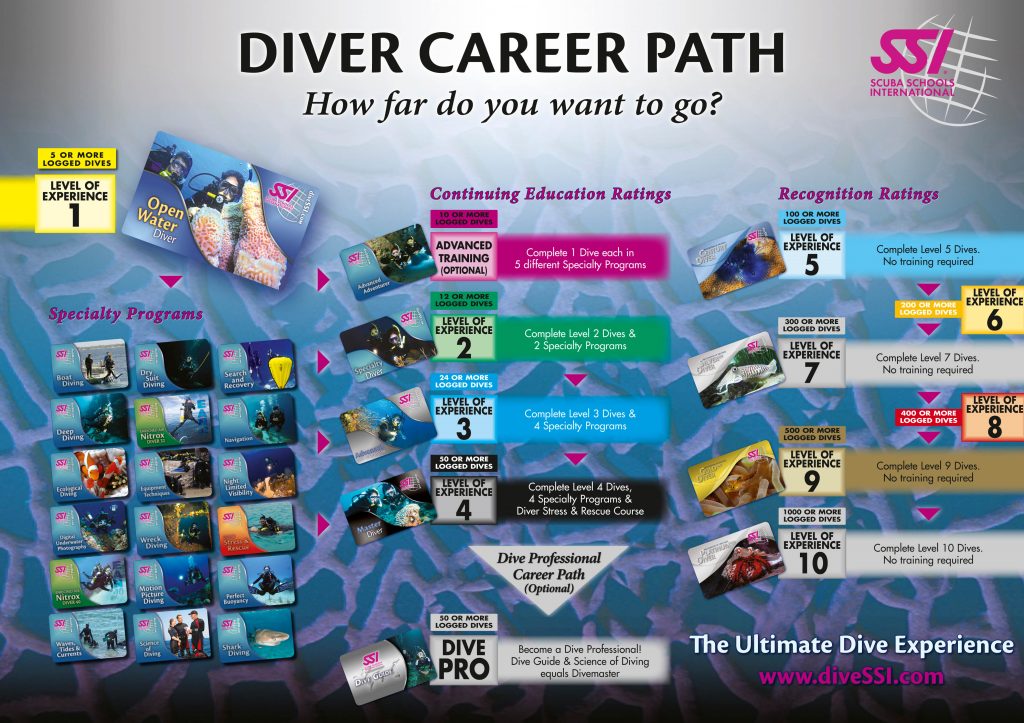
Here are some of the most recognized scuba agencies around the world:
PADI – Founded in the U.S., PADI has become the biggest name in scuba diving, with millions of certified divers.
SSI – Headquartered in the U.S. and globally renowned, SSI offers a variety of diving courses and operates in over 100 countries.
NAUI (National Association of Underwater Instructors) – One of the oldest agencies with a strong focus on diver safety and education.
SDI (Scuba Diving International) – Known for its modern, flexible approach to diver training.
CMAS (Confédération Mondiale des Activités Subaquatiques) – A European-based organization with a significant global presence.
TDI (Technical Diving International) – Specializes in technical and advanced diving certifications.
While these agencies may have different origins and unique training styles, they are all bound by the same basic standards for safe and effective diver training.
The Evolution of Scuba Training: PADI vs. SSI
PADI has long been the dominant force in the scuba industry. As the world’s largest scuba diver training organization, PADI has built a global brand and earned significant market share. Its recognition has made it the go-to choice for many aspiring divers. However, despite this success, PADI’s dominance has begun to slip in recent years.
A Shift in the Scuba Industry: SSI’s Rapid Growth
SSI is experiencing a significant surge in popularity. Originally known for its strong educational standards and smaller, more personalized approach, SSI was acquired by HEAD, a well-known sports manufacturer and scuba equipment distributor. This move has allowed SSI to scale rapidly, offering an increasingly diverse range of courses and experiences.
In fact, SSI’s market share has been growing steadily, particularly in recent years, as they’ve partnered with Aqualung, one of the most iconic names in scuba equipment. Aqualung, founded by Jacques Cousteau (the famous French explorer), has been a pioneer in diving gear innovation. SSI’s acquisition of Aqualung signals a major strategic shift and hints at the organization’s potential to lead the future of the diving industry.
With this acquisition, SSI is set to become a major competitor to PADI, offering not just world-class diver training but also access to cutting-edge diving equipment. By combining high-quality training with the industry’s best gear, SSI is positioning itself as a leader in both education and equipment.
Why the Choice of Agency Doesn’t Matter Much
While PADI and SSI may have different origins (PADI was founded in the United States, while SSI was founded in Europe), their training philosophies are remarkably similar. In fact, when you compare them side by side, the primary difference is that one was established in the U.S. (PADI), and the other in Europe (SSI).
Other small differences include:
PADI tends to have a larger, more global presence.
SSI focuses on a smaller, community-driven approach, offering a more personalized experience.
The truth is, both agencies offer exceptional diver training, and the decision usually comes down to personal preference, convenience, and the dive center you choose to work with.
Looking to the Future
While PADI has been the dominant brand for decades, SSI’s growing presence and strategic partnerships show that it’s quickly catching up. As SSI continues to expand its market share, especially with its acquisition of Aqualung, it looks poised to become the new leader in diver training. The brand’s increased focus on equipment and training, along with its growing reputation, might just be the formula for success in the coming years.
Conclusion
Whether you choose PADI, SSI, or another recognized agency, rest assured that you’ll receive the same high-quality education that adheres to the WRSTC guidelines. Both agencies have established themselves as reliable, professional organizations, and they share much in common. What’s more, the choice between them often comes down to personal preferences, location, or convenience.
However, with SSI’s impressive growth and Aqualung acquisition, it’s clear that they are making a play to become the next big name in the industry. As they continue to grow, they may eventually overshadow PADI and become the go-to organization for diver education. Only time will tell, but for now, divers can feel confident knowing they are receiving top-notch training no matter which agency they choose.
Want to go ahead and book your SSI Course with us: https://book.bigbluediving.com/
