


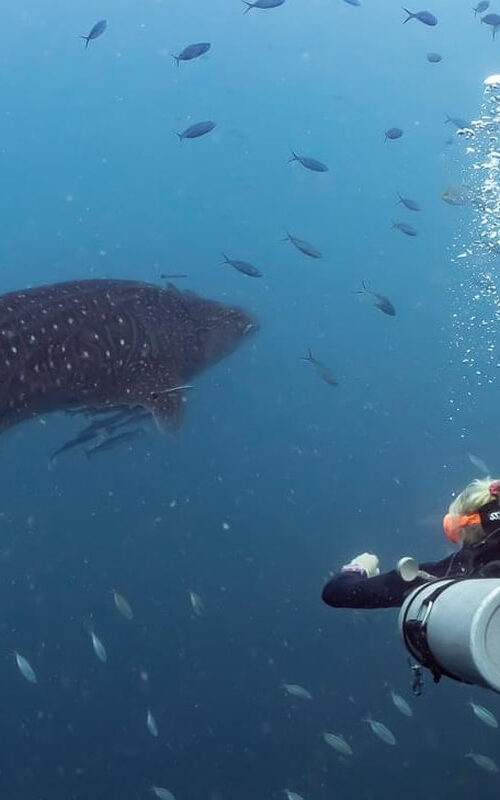
Sidemount diving, on the face of it, seems like one of those ideas invented by people who own more dive gear than furniture. Instead of carrying your tanks on your back like a normal person, you clip one on each side and glide through the water like a submerged dragonfly. It looks odd. It feels peculiar. And it works absurdly well.
Once the preserve of cave explorers and tech diving eccentrics, sidemount has drifted gracefully into the mainstream—and with good reason. It offers all the practical benefits of backmount diving, with a good deal more comfort, flexibility, and let’s face it, style.
So, for the record—and for those baffled at the sight of divers floating sideways like underwater librarians—here’s the answer to the question most commonly asked about sidemount diving:
Why Should I Dive Sidemount Instead of Backmount?
1. Trim Like You’ve Been Doing Yoga Since Birth
The sidemount configuration creates a horizontal profile so flat and stable you could balance a compass on it. Buoyancy control becomes not just easier, but strangely satisfying. It’s as if the equipment does half the work for you—because, well, it sort of does.
2. Redundancy, Also Known as “Not Running Out of Air”
With two independent tanks and regulators, sidemount offers built-in gas redundancy. One tank misbehaves? Simply switch to the other. It’s a self-contained, streamlined failsafe system that makes even the most cautious diver feel comfortably over-prepared.
3. Comfort Where It Counts
Unlike traditional backmount where tanks are hoisted like oversized backpacks, sidemount tanks are attached in the water. This means no spinal strain, no awkward waddling to the entry point, and significantly less complaining about heavy gear. Chiropractors quietly dislike it.
4. Perfect for Tight Spaces and Curious Minds
Sidemount divers slip through caves, wrecks, and swim-throughs with the poise of a curious seal. The lower profile is ideal for exploring places that were previously considered suitable only for fish and reckless people.
5. Modular, Flexible, and Travel-Friendly
Sidemount kits are typically more modular and packable than their backmount counterparts—especially helpful for those diving in remote locations or who consider airline baggage limits to be personal challenges.
Learn Sidemount with Big Blue Tech – Koh Tao’s Premier Tech Diving Centre
If sidemount sounds like the intelligent choice it is, then there’s only one logical place to learn it: Big Blue Tech, the largest and most respected technical diving facility in Thailand.
Here’s why:
Industry Leaders – With decades of experience, Big Blue Tech is a trusted name in tech diving, sidemount training, and advanced scuba education.
Expert Instructors – The team consists of dedicated tech professionals who don’t just teach sidemount—they live it.
Top-of-the-Line Equipment – Big Blue Tech offers premium gear and cutting-edge setups, including Razor, XDeep, and Hollis systems.
Unbeatable Location – Koh Tao’s ideal water conditions make it the perfect classroom. Learn sidemount while gliding past coral gardens, granite swim-throughs, and the occasional bemused turtle.
Comprehensive Courses – From beginner sidemount specialties to advanced technical courses, Big Blue Tech provides tailored pathways for every diver looking to go further.
Final Thoughts: Two Tanks, One Brilliant Idea
Sidemount diving is not just a trend—it’s a smarter, more elegant way to dive. It offers superior trim, safer gas management, easier handling, and the subtle joy of gliding effortlessly sideways.
If you’re ready to dive into something better, Big Blue Tech on Koh Tao is where you’ll find world-class training, expert instructors, and the calm assurance that you’re learning from the best.
