


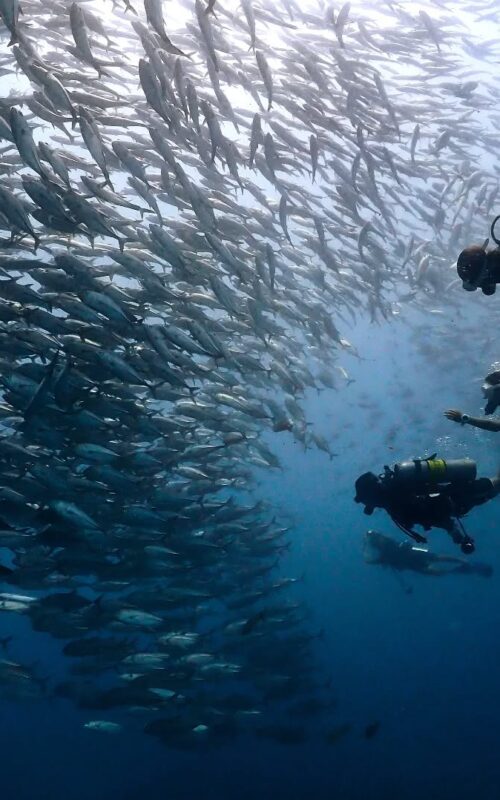
If the ocean had a university, Koh Tao would be its campus — palm-fringed, sun-dappled, and slightly overrun by backpackers wearing jandals that have clearly seen better days. This tiny island off Thailand’s east coast is famous for many things: affordable diving, spectacular coral reefs, and mango shakes so good they should be illegal. But above all, it’s known as the world’s most popular place to get scuba certified. So, how long does it actually take to get scuba certified in Koh Tao? Spoiler: not as long as you’d think.
🕒 How Long Does It Really Take to Get Scuba Certified in Koh Tao?
The short answer? 2.5 days.
The long answer? Well, let’s dive a bit deeper (pun fully intended).
Day 1: Bubbles, Buoyancy, and the Basics
Your first day is part classroom, part underwater kindergarten. You’ll learn about pressure, safety, hand signals, and the magical art of not holding your breath while diving (a surprisingly crucial skill).
Then comes your first taste of scuba — in a swimming pool or calm shallow bay — where you’ll learn how to clear your mask, control your buoyancy, and resist the urge to panic when you realize fish don’t have personal space.
Day 2: Pool Practice and Open Water Dives
By day two, you’re feeling confident, like a goldfish that’s been promoted. You’ll do your first open-water dives, typically two of them, descending to about 12 meters. Expect to meet curious clownfish, swaying coral gardens, and possibly a dive instructor who should have his own nature documentary.
Half-Day 3: The Grand Finale
The final morning is your victory lap. You’ll complete your last two dives (usually down to 18 meters), perform a few safety skills, and bask in the fact that you’re officially becoming a certified scuba diver. By lunchtime, you’ll be holding your temporary certification card — and probably a celebratory smoothie.
🌊 SSI vs PADI in Koh Tao: What’s the Difference?
Koh Tao’s dive scene is dominated by two main certification agencies: SSI (Scuba Schools International) and PADI (Professional Association of Diving Instructors). Both offer internationally recognized certifications — meaning once you’re certified, you can dive anywhere from the Maldives to Mexico.
SSI: The Student-Centered Choice
SSI takes a more flexible, student-focused approach. Your instructor can adjust the pace to suit you, making it ideal if you like learning without feeling rushed. The digital learning materials are modern, the instructors often more personal, and the vibe a bit more “let’s make sure you love diving” than “let’s get another certification out the door.”
PADI: The Global Giant
PADI, on the other hand, is the Coca-Cola of scuba certifications — instantly recognizable and everywhere. It’s more structured, slightly pricier, and heavily marketed. Some divers joke that PADI stands for “Put Another Dollar In,” but the truth is it’s a rock-solid certification used worldwide.
Spoiler: They’re Basically the Same Underwater
Here’s the thing: once you’re 10 meters down, no one cares what logo is on your dive card. Both SSI and PADI teach the same safety standards, same skills, and same underwater love affair with the ocean. The only real difference is in how the learning is delivered — not what you learn.
💬 Why Most Divers Choose SSI in Koh Tao
In Koh Tao, SSI reigns supreme, and not just because the logos look good on t-shirts.
It’s generally more affordable (by about 10–20%).
Courses are more personalized and less rigid.
Instructors have more freedom to adapt to your pace.
The digital learning platform is smooth, intuitive, and eco-friendly (no soggy textbooks here).
PADI might dominate the marketing world, but SSI quietly dominates the teaching one — especially on Koh Tao, where word-of-mouth matters more than flashy branding.
🎓 What You’ll Learn During the Course
During your 2.5-day certification, you’ll cover a mix of theory, pool sessions, and open-water dives. Here’s what that really means:
Safety and Equipment Use: How to assemble your gear and avoid looking like you’re wrestling an octopus.
Buoyancy Control: The fine art of hovering like a zen jellyfish instead of crashing into coral like an underwater tourist.
Underwater Navigation: Using a compass, following your buddy, and not mistaking a rock for a sea turtle.
Environmental Awareness: Learning to protect the reefs you’ll come to love.
By the end, you’ll feel comfortable and confident exploring the ocean — not just in Koh Tao, but anywhere on Earth.
🌅 What Makes Koh Tao Ideal for Beginners
Warm, clear water year-round.
Gentle currents and shallow reefs that are perfect for practice.
Over 70 dive schools, from family-run outfits to big professional centers.
Dive sites like Japanese Gardens and Twin Peaks, tailor-made for beginners.
Plus, Koh Tao’s relaxed island energy makes even the most nervous first-timer feel at home.
💡 Tips Before You Take the Plunge
Book your course ahead during peak season (December–April).
Read reviews — smaller class sizes often mean better instruction.
Bring reef-safe sunscreen, a reusable water bottle, and your sense of wonder.
Don’t party too hard the night before your first dive — trust us on this one.
❓ FAQs About Getting Scuba Certified in Koh Tao
Q1. How much does the course cost in Koh Tao?
A standard Open Water course costs between ฿9,000–11,000 THB ($250–300 USD).
Q2. Is SSI certification valid worldwide?
Yes — SSI is recognized globally, just like PADI.
Q3. Can I switch from SSI to PADI later?
Absolutely! Your certifications are interchangeable; you can take advanced or specialty courses with either agency.
Q4. What if I’m not a strong swimmer?
You don’t need to be Michael Phelps. As long as you can float and swim 200 meters unassisted, you’re golden.
Q5. Do I need travel insurance for diving?
Yes — make sure your policy covers scuba diving up to 18 meters.
Q6. Can I dive if I wear glasses?
Yes — you can rent or buy a prescription mask.
🏁 Conclusion: The Certification You’ll Never Forget
Getting scuba certified in Koh Tao isn’t just about learning to dive — it’s about joining a global tribe of ocean lovers. In just 2.5 days, you’ll transform from surface-dweller to underwater explorer. Whether you choose SSI or PADI, the real reward is the world that opens beneath the waves.
And who knows? You might just find yourself hooked — because once you take your first breath underwater, every holiday after will seem just a little too… dry.
