


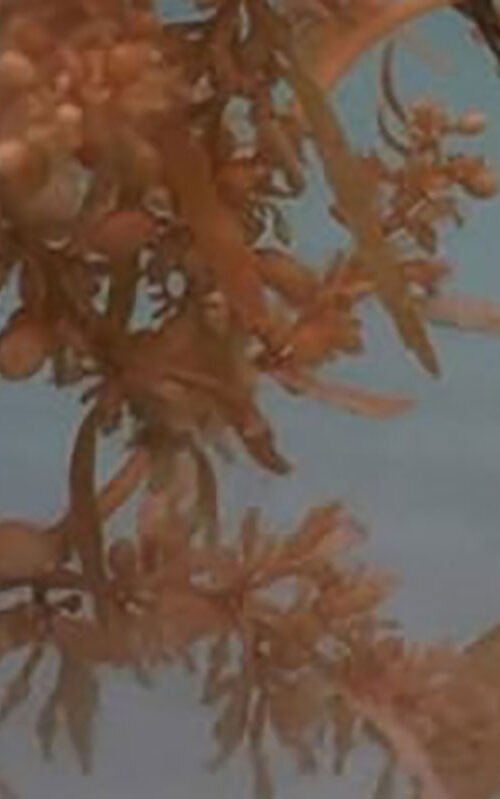
Seahorses on Koh Tao were once a common site all around the island until the demand in them from Chinese medicine made them as scarce a marine life here as a seal!
The seahorse otherwise known as Hippocampus, Latin for horse sea monster, are small bony segmented fish that have a distinctive head and neck shaped like that of a horse. They are most commonly found in shallow waters, clinging to seagrasses or other marine plants. Described as the slowest fish, they struggle to avoid predation and affects by human activity, leading to reductions in world populations. So in collaboration with the citizen science project, iSeahorse, you can help monitor local seahorse populations.
Anyone can join, whether you’re a diver, a scientist, a seahorse enthusiast, or just on a beach holiday. You can upload your photos and observations to https://www.iseahorse.org/. By doing so, you can help identify seahorse species and you can advocate for their protection in your ocean neighborhood.
When can you see Seahorses on Koh Tao?
While diving on Koh Tao keep your eyes open, according to locally collected citizen science data April is the month to see seahorses on Koh Tao. These sightings are not as common as you might think, and each observation is an invaluable piece of information in understanding the puzzle of these shy, curious creatures’ populations that are hiding out there in the waters around our island. We have been working with iSeahorse.org to track and monitor seahorse populations as observed by divers. Any divers who see a seahorse either underwater or even washed up on the beach are able to report their sightings to the site, or to iNaturalist.org. After 7 years of data collection, we are starting to see some interesting trends.
Observations are broken up by region and then by site. For our region in SE Asia, the most observed seahorse is the Hedgehog Seahorse (H. spinosissimus) and is mostly observed in March and April, with sightings all around the Gulf of Thailand. So far there have only been 21 reported observations of seahorses on Koh Tao. The next most prevalent species in the region is the Tiger Tail Seahorse (H. comes), with the largest peaks in observations in April, but smaller peaks in January and October. There are only 2 observations from Koh Tao, however, these are disputed, and it is unconfirmed whether or not Koh Tao has the Tiger Tail Seahorse.
The third most abundant seahorse in the region is the Common Seahorse (H. kuda), with an impressive 8 observations on Koh Tao. This seahorse was spotted mostly in March and November and is a tough one to spot due to its small size. The fourth most abundant seahorse is the Three-Spot Seahorse (H. trimaculatus) seen mostly in April, with a smaller peak in June. The most rarely sighted species in the region is the Great Seahorse (H. kellogi) which has been seen twice on Koh Tao. 2015 was regarded as ‘the year of the seahorse’ in regards to our own sightings, with 34 individuals sighted in just a few months, mostly in Sai Nuan.
All of the seahorse species discussed above are listed as vulnerable under the IUCN. Seahorses face a variety of threats, most saliently the threat of overfishing and collection. Seahorses are in high demand in countries such as China and Taiwan for there value in traditional medicine (with no scientifically proven benefits), and Thailand is one of the world’s major suppliers to that trade, and Koh Tao is no exception to that. In 2016, one of our interns discovered a bottle during a beach clean-up which contained 3 dead seahorses, along with some pieces of fruit. Furthermore, seahorses are affected by the same problems that are affecting most other animals on the reefs, including habitat destruction and climate change. As such, they are an important bioindicator of the health of our oceans and act as the ‘canary in a coal mine’ to warn us about the impacts we are having on our marine ecosystems and resources.
As a community, we have identified a total of 4 (possibly 5) species of seahorses, although when we began in 2014 we thought there were only 3 species here on the island. This project is still young but has already proven itself to be both interesting and valuable. We want to take this opportunity to remind and encourage folks to report their seahorse sightings to iSeahorse.org and continue to contribute to this great project. So, keep your eyes open, report your observations, and let’s help save seahorses together.
