


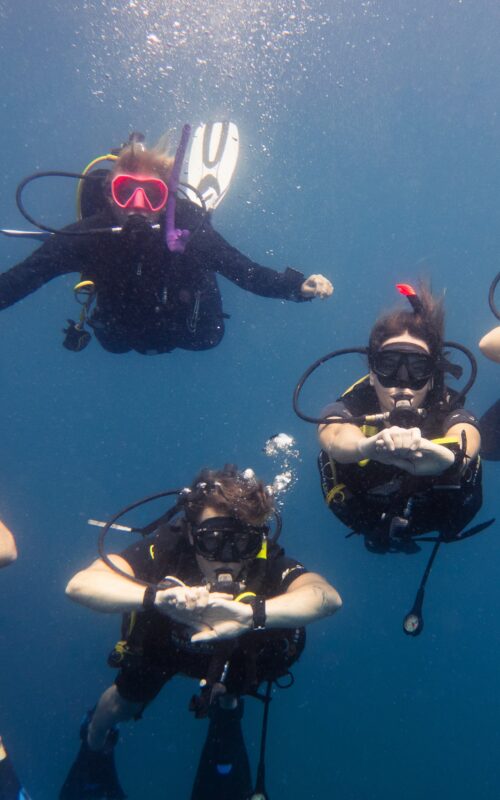
Taking an Open Water course is the first step towards becoming a certified scuba diver. It is also completely normal to feel excited, curious and slightly nervous before beginning.
During your Open Water course in Koh Tao, you will learn how scuba equipment works, practise essential skills in a swimming pool and complete four training dives in the sea. Each stage builds gradually on the one before it, helping you become more comfortable and confident underwater.
This guide explains what the experience is really like, from receiving your digital learning materials to completing your final dive and earning your SSI certification.
What Is the SSI Open Water Diver Course?
The SSI Open Water Diver course is an internationally recognised entry-level scuba certification for complete beginners.
The course teaches you the knowledge and practical skills needed to dive with another appropriately certified diver, within the limits of your training, experience and local regulations.
At Big Blue Diving, the course includes:
- SSI digital learning materials
- Instructor-led theory and knowledge reviews
- An introduction to scuba equipment
- Confined-water training in a swimming pool
- Four open-water training dives
- Small-group instruction
- Use of the required scuba equipment
- SSI certification after successfully completing the course
You can view the current price, prerequisites, inclusions and timetable on the SSI Open Water Diver course in Koh Tao page.
Do You Need Previous Diving Experience?
No previous scuba diving experience is required. The course is designed to introduce each subject and skill from the beginning.
You do not need to know how to assemble scuba equipment, breathe through a regulator or control your buoyancy before arriving. Your instructor will demonstrate these skills and give you time to practise them in a controlled environment.
You should, however, be reasonably comfortable in the water and able to complete the course swimming requirements.
Before the Course: Digital Learning and Preparation
Once your course is arranged, you can begin the SSI digital learning materials through your MySSI account.
The academic content introduces important subjects such as:
- How pressure changes underwater
- How scuba equipment works
- Breathing and air consumption
- Equalising your ears
- Buoyancy and body position
- Underwater communication
- Planning safe recreational dives
- Responding to common diving situations
You do not need to memorise everything immediately. The purpose of completing the learning in advance is to become familiar with the terminology and arrive with questions for your instructor.
You can also learn more about the programme through the official SSI Open Water Diver information.
Meeting Your Instructor and Dive Group
At the beginning of the course, you will meet your instructor and the other students in your group.
Your instructor will explain how the programme will run, confirm that the required paperwork has been completed and discuss any concerns you may have.
This is a good time to mention if you:
- Feel nervous about breathing underwater
- Have difficulty equalising your ears
- Are not a confident swimmer
- Have previously had an uncomfortable experience in the water
- Need more time to understand or practise a particular skill
- Have a medical condition or take regular medication
Being honest with your instructor helps them adjust their teaching and provide appropriate support.
Learning How Scuba Equipment Works
Before entering the water, you will be introduced to the main pieces of scuba equipment.
These normally include:
- A mask and snorkel
- Fins
- A wetsuit
- A buoyancy control device
- A regulator and alternate air source
- A cylinder
- Weights
- Pressure and depth-monitoring instruments
Your instructor will show you how the equipment fits together, how it should feel when worn and how to complete basic checks before entering the water.
You are not expected to understand every component immediately. Equipment preparation is repeated throughout the course, and the process becomes more familiar each time.
Your First Time Breathing Underwater
For many students, the most memorable part of the course is taking the first breath through a regulator.
Breathing underwater can initially feel unusual because you are relying on equipment rather than lifting your face to the surface. Some students adapt almost immediately, while others need a few minutes to relax and establish a comfortable breathing rhythm.
The first practical session takes place in a swimming pool or another controlled-water environment. This allows you to begin in shallow water, where you can stand up if necessary.
Your instructor will not expect you to move straight into deeper water. You will normally begin by breathing with your face submerged before gradually progressing as your comfort improves.
What Skills Will You Practise in the Pool?
The confined-water session introduces the practical skills needed for open-water diving.
Your instructor will demonstrate each exercise before asking you to repeat it. Typical skills include:
- Breathing comfortably through the regulator
- Recovering and clearing the regulator
- Allowing water into the mask and clearing it
- Using hand signals to communicate
- Controlling ascents and descents
- Establishing positive buoyancy at the surface
- Sharing an alternate air source
- Monitoring your air supply
- Removing and replacing selected equipment
- Developing neutral buoyancy
The purpose is not simply to perform each skill once. You need to understand what you are doing and demonstrate that you can respond calmly.
What if You Struggle With a Skill?

It is common for students to find one skill more difficult than the others.
For example, one person may be comfortable breathing underwater but dislike water entering the mask. Another may clear the mask easily but initially struggle to control buoyancy.
If a skill feels difficult, your instructor may:
- Demonstrate it again
- Break it into smaller steps
- Allow you to practise in shallower water
- Change the pace of the exercise
- Give you additional time to become comfortable
There is no benefit in pretending to feel comfortable when you do not. Communicate with your instructor and repeat the skill until you understand it.
Your First Open-Water Dives
After completing the initial pool training, you will progress to your first two dives in the sea.
Your instructor will choose beginner-friendly sites based on local conditions. Before entering the water, the group will receive a detailed briefing explaining:
- The planned dive site
- Entry and exit procedures
- The maximum planned depth
- The skills that will be completed
- Important hand signals
- Buddy organisation
- What to do if you become separated
- Marine life you may encounter
Your first open-water dives are conducted to a maximum training depth of 12 metres.
How Does Ocean Diving Feel Different From the Pool?
 The sea is a more dynamic environment than the swimming pool. You may notice waves at the surface, changing visibility, sand, coral, fish and a greater sense of depth.
You will also be wearing the equipment for longer and moving through a larger area.
Your instructor will stay close to the group and control the pace of the descent. You will normally descend using a line or another controlled reference, giving you time to equalise and adjust to the surroundings.
Once the required training skills are complete, you will have an opportunity to explore the site and begin experiencing recreational diving.
Will You See Marine Life During the Course?
Your training dives take place at real dive sites, so you are likely to encounter tropical marine life while completing the course.
Depending on the site and conditions, this may include reef fish, butterflyfish, angelfish, groupers, moray eels, anemonefish, stingrays and other reef species.
Turtles and larger marine animals are also found around Koh Tao, but wildlife encounters can never be guaranteed.
You can learn more about local species in our Koh Tao marine-life guide.
Do You Spend the Entire Dive Performing Skills?
No. Training skills are an important part of the dives, but the entire experience is not spent completing exercises.
Once the required skills have been demonstrated, the group can explore the dive site with the instructor. This gives you time to practise swimming, buoyancy control, communication and awareness while enjoying the underwater environment.
As you gain experience, you may notice that you begin using the skills more naturally rather than consciously thinking about every movement.
Your Final Two Training Dives
The final two dives give you an opportunity to apply what you have learned with greater confidence.
Eligible adult students can gradually progress to a maximum training depth of 18 metres. Younger students are subject to the appropriate junior depth and supervision limits.
During the final dives, you may practise or demonstrate skills involving:
- Dive planning
- Buddy checks
- Controlled descents
- Buoyancy and trim
- Underwater navigation
- Air monitoring
- Controlled ascents
- Surface procedures
Your instructor will assess your overall competence throughout the course rather than relying on a single final performance.
What Does Certification Mean?
After successfully completing the academic learning, confined-water training, swimming assessment and four open-water dives, your instructor can process your SSI Open Water Diver certification.
The certification confirms that you have completed entry-level training and may dive with another appropriately certified diver within the limits of your qualification.
Certification does not mean that you have finished learning. It gives you the foundation needed to gain experience and continue developing your skills.
How Long Does the Course Take?
Big Blue’s current Open Water course takes approximately two and a half training days, spread across parts of three calendar days.
Because this article focuses on the experience rather than travel scheduling, you can find the complete timetable, arrival advice and flying-after-diving guidance in our article explaining how long the Open Water course takes in Koh Tao.
What if You Feel Nervous Before an Ocean Dive?
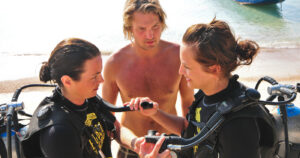
Some students feel comfortable in the swimming pool but become nervous before entering the sea. This is also normal.
The boat briefing, equipment checks and controlled descent are designed to make the transition manageable. Tell your instructor how you feel rather than trying to hide your concern.
Helpful approaches include:
- Listening carefully to the briefing
- Preparing equipment without rushing
- Focusing on slow, regular breathing
- Staying close to your instructor and buddy
- Descending gradually
- Communicating immediately if something feels wrong
You remain responsible for communicating your comfort level. You should never feel pressured to continue when you need to pause or end a dive.
What Happens if You Cannot Complete the Course?
Certification is based on meeting the required knowledge and skill standards. It is not automatically issued simply for attending each session.
If you need additional practice, the instructor will explain the available options. Depending on what you have completed, this might involve extra training, finishing the remaining requirements later or receiving an appropriate referral or partial certification.
Allowing some flexibility in your travel plans is helpful because students do not all develop practical skills at exactly the same pace.
What Can You Do After Open Water Certification?
Once certified, you can begin gaining experience through recreational diving.
Many newly certified divers choose to:
- Join guided fun dives in Koh Tao
- Practise buoyancy and air management
- Explore new dive sites
- Learn to identify marine life
- Complete an advanced diving course
- Train in specialties such as nitrox, deep diving, wreck diving or underwater photography
Continuing to dive with experienced professionals can help you consolidate the skills learned during your course.
Is the Open Water Course Right for You?
The Open Water course is generally the best choice if you want a complete beginner certification and intend to continue scuba diving after Koh Tao.
A shorter programme may be more suitable if you only want to experience diving once or do not have enough time to complete the full certification.
You can compare the Basic Scuba Diver, SSI Scuba Diver and Open Water options on our beginner scuba diving courses in Koh Tao page.
Begin Your Open Water Course in Koh Tao
Your Open Water course will introduce you to scuba equipment, underwater communication, buoyancy, safety procedures and the experience of exploring real dive sites.
You are not expected to arrive as a confident diver. Confidence develops through clear instruction, controlled practice and gradually applying your skills in the sea.
View the full SSI Open Water Diver course in Koh Tao for current schedules, inclusions, requirements and booking information.
