


In about a week, the world will come together to celebrate and promote women and girls working in science. International Day of Women and Girls in Science, held every year on February 11th, sets aside some time for us to recognize the critical role that women and girls play in science and technology.
Our Big Blue Conservation department has been without a manager for about a year. It’s been extra challenging to find the perfect person to take the helm during Covid. But we’ve done it – We’ve found the perfect person to lead Big Blue Conservation out of 2020 and into the future! And we think there is no better time to announce HER arrival than right around the celebration of women in science.
Jade Getliff originally came to Big Blue Diving as a student looking to get her Divemaster certification to support her marine research project dreams. She made an impression on us – especially her pizza box stacking skills! After her training, she started a research project in the Galapagos Islands and put her new diving skills to good use doing valuable marine creature research. But like most people who visit Koh Tao, she just couldn’t stay away. Jade has just returned to us from Cornwall, UK, and is now our shiny new Big Blue Conservation Manager! She manages our entire conservation branch including running eco courses and internships, maintaining our artificial reef, and organizing regular beach and island cleanups. Have a random turtle joke? Jade loves bad ocean jokes when she’s unwinding at the bar after a hard day of saving the planet.
We want to get to know Jade better and we know you do too, so we asked her a bunch of questions. She spills the beans below.
When did you first know you wanted to get into marine biology?
As cliché as it sounds, I’ve always been fascinated by the ocean. As a child I spent all of my free time on family holidays roaming around rock pools, snorkeling and reading about all of the amazing little creatures I’d find. As I got older, I enjoyed science so much at school as well as campaigning for marine conservation issues and researching threats marine species face… but didn’t really know marine biology could be a real-life career! I’m very lucky that I have parents that encourage me in every endeavor and instilled in me the importance of following your dreams – I went on to study Marine Biology at university and worked incredibly hard to get every opportunity that came by. Now, 5 years on, I have rehabilitated and researched endangered turtles in Cyprus, Whales and Dolphins in England and most recently Sharks and Rays in Galapagos. My passion for marine conservation and open access research has propelled me this far, and I am hoping to publish my first scientific paper very soon – watch this space!
You have plenty of volunteer work under your belt – why is volunteer work important to you?
A career in marine conservation isn’t easy to pursue, and volunteering is your ladder of opportunities to develop your knowledge and experience, as well as give time to energy to a cause you care deeply about. For me, volunteering was the first opportunity to work firsthand with marine animals and learn about research and conservation methods in the field – which is so incredibly exciting!
International Day for Women and Girls in Science is coming up soon – what would you say to young girls that are considering science careers?
Do it! The science field is changing in the path of powerful and passionate women like ourselves, and there is an incredibly supportive network for emerging female scientists, especially in the field of marine science where actually, women are starting to dominate! An issue that I’m aware of that persists in science is the drop of women towards higher status roles, such as professors. Lots of women are entering science but not climbing the ladder, where men still dominate at the top… but I hope that with the next generation of female scientists and newfound awareness of this issue in academic institutions, this could change to become more equal.
Who would you say is your female scientist role model?
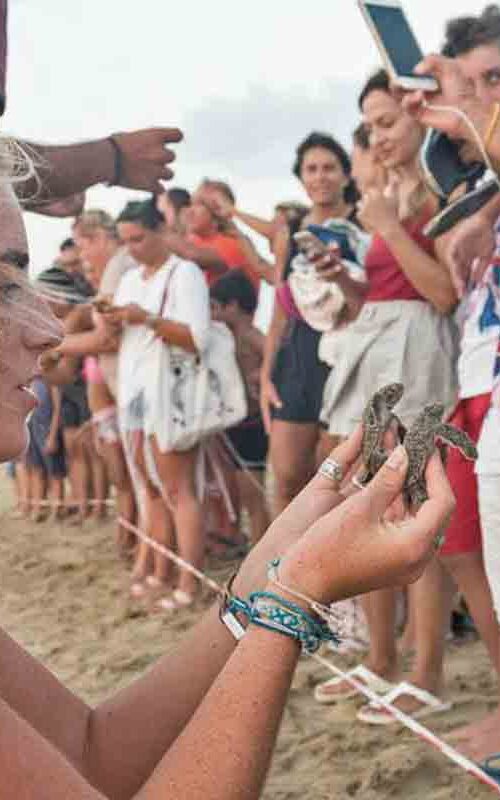
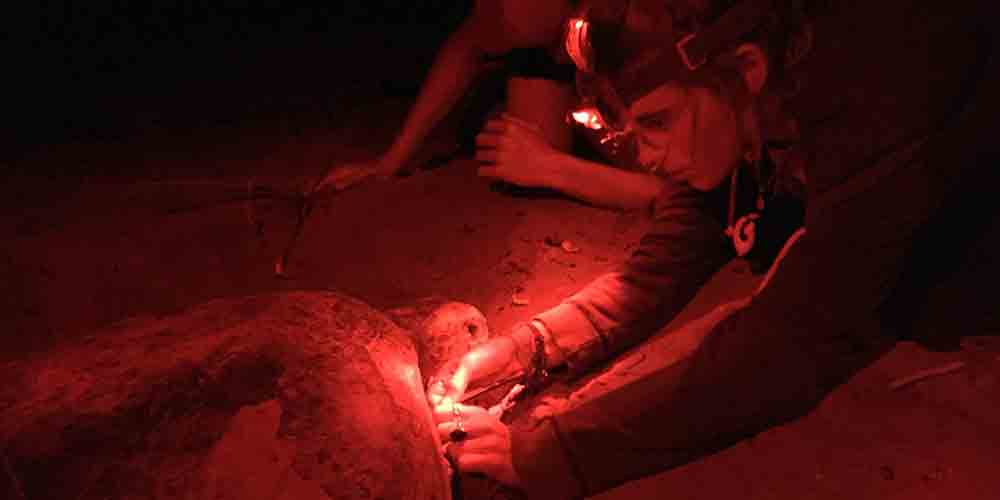
I gave been very lucky throughout my career to have strong female mentors in my life. The supervisor I had as an undergraduate at university is a world leading expert in her field and pushed me to continue to fight for opportunities to develop my knowledge and skills. After working on my own research in the field, she gave me my very first paid job in marine research and conservation in which I managed a team which successfully rescued and released over 10,000 endangered turtle hatchlings as well as protected and monitored ~1000 turtle nests. Undoubtably in this role I felt an overwhelming sense of imposter syndrome, as I have done in my role in Galapagos and I’m sure I will do in Koh Tao – but it’s ladies like these that keep me believing that actually, I can do this, and I will succeed. I continue to be mentored by incredible female scientists at the university, and I hope that one day I’ll have the opportunity to give back and mentor fellow conservationists in the field.
Why is marine conservation important?
Oceans and the ecosystems within them underpin life on Earth, without them, we’d be screwed! Of course, I feel a deep connection with the ocean, and love spending time in it and on it and because of that I want and need to protect it, however, as humans it’s also well within our best interests to maintain marine ecosystem functionality – especially so in island communities. As humans we rely so heavily on the ocean not only for food security, but also for economically and for coastal protection. In light of the recent pandemic, it has become ever clearer how much in island communities we rely on ecotourism for income. The Galapagos Islands are experiencing incredible economic problems, with the pandemic preventing any ecotourism activities. If ocean systems were overexploited and left to decline into a state of non-functionality, this would be the reality all around the globe where communities rely on the ocean for tourism and income. In the western world it is easy to forget how much we rely on the ocean, however without thriving oceans food security would soon become a very real issue for us too. Building a connection between people and the ocean through conservation, education and outreach is the key to turning the tide on marine biodiversity decline.
What is the number one problem that our oceans are facing?
Oceans are facing a plethora of threats, and it is hard to say really which one is top. Literature published over the last few decades details a huge variety of threats, notably overexploitation, which poses very immediate danger to every trophic level in marine ecosystems, where species are overfished, and ecosystems are put out of balance. Plastic pollution and anthropogenic debris are also emerging as significant threats, but I fear that climate change and disease linked to climate change will soon emerge as yet unquantified but powerful pressures on many already threatened marine species; these two threats are at the core of my current research.
How did you end up at Big Blue Diving?
When I finished my undergraduate degree here in the UK there was a period of great uncertainty where I didn’t really know what was going to happen next. I had put in various permits and permissions to conduct my research out in the Galapagos Islands, and had heard nothing back. I was so anxious about whether my research proposals would be accepted or not, my brain needed a break and in a moment of complete spontaneity booked a plane ticket to Thailand with the goal of becoming a Dive master! I mentioned my plans to a friend of mine at university, and he recommended I go to Big Blue (shout out to Zac) and it changed my life! I discovered an unknown passion for scuba and set my sights on becoming a PADI instructor, which I finally at home in the UK. I was going to stay in Thailand… but then my research was approved and off I went to the opposite side of the world. Now a year later I’m coming back, and I can’t wait!
Where do you hope to take Big Blue Conservation in the next year?
I have so many ideas of what I’d like to do when I get stuck in at Big Blue Conservation! Firstly, I’d like to establish robust monitoring protocols of the gorgeous dive sites around Koh Tao and the wildlife that inhabit them and use these baseline surveys as well as the joint efforts of the community to work towards effective conservation that not only visiting divers can take part in, but also the local community. The key to effective conservation is community engagement and involvement as well as robust science supporting it behind the scenes, this is what I’d like to establish, as well as offering opportunities for interns to join the team and take part.
How can people get more involved in marine conservation?
You don’t have to be a scientist or a diver to get involved in marine conservation. Making lifestyle changes such as reducing your consumption of single use items as paying attention to what you eat, and your daily activities is a great first step. There are tons of open access papers online where you can access and read about what’s going on in frontline marine conservation and research, and this can help you monitor your impact on the world. If you’re seeking a career in marine conservation, persistence, volunteering, more persistence, nagging, and grabbing every single opportunity that arises is what I found to work so far! You’ve just got to keep pushing and show your passion and dedication, and it’ll pay off.
How can people get in touch with you to get more information about marine conservation training?
In order to enquire about internships in marine conservation & biodiversity, as well as opportunities to do academic project internships here at Big Blue, you can contact us via the website and our Facebook page.
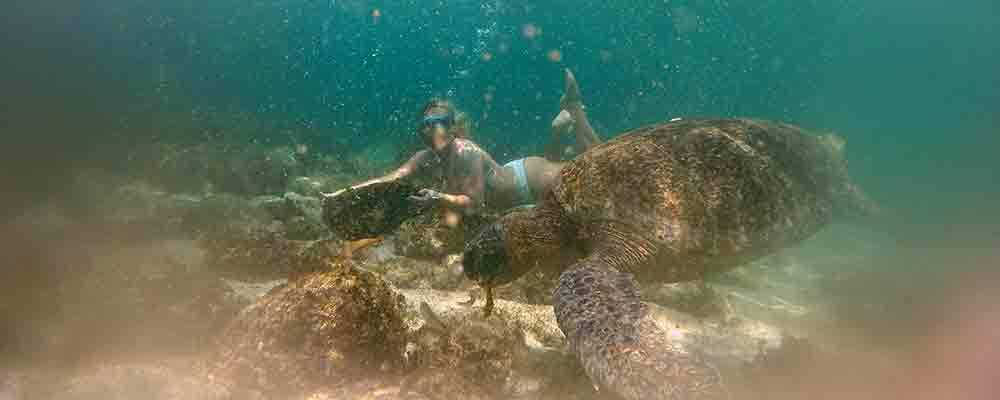
Join us in welcoming Jade to the Big Blue Dive Crew! We know she’ll fit right in with the rest of us bubble-blowers, and will work tirelessly to rebuild and protect the reefs around Koh Tao and spread the word about marine conservation.
She’s our own ‘Woman in Science’ and she’s going to make us proud.
