


Nudibranchs
Scientific name Nudibranchia
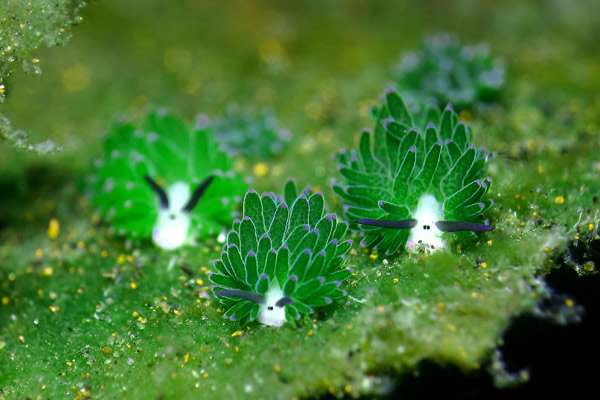
Nudibranchs — often called “sea slugs” — are some of the most colourful and photogenic creatures on the reef. Despite their delicate appearance, many species are chemically defended and brightly coloured to warn predators.
They have soft bodies with no shell in adulthood and are recognised by two sensory organs on their head called rhinophores, which they use to detect chemicals in the water. Many species also display feathery gills on their backs.
Around Koh Tao, nudibranchs are found on coral reefs, rocky substrates and sandy patches between 3–30 metres. They are small — often just a few centimetres long — making them a favourite subject for macro photographers and patient divers.
Each species often feeds on a very specific type of sponge, hydroid or soft coral, which is why they are usually found directly on their food source.
Though slow-moving, they are highly specialised and play an important role in reef biodiversity.
Find Nudibranchs at...
Divemaster's tip
Slow down. Look closely at sponges, hydroids and soft corals rather than scanning open water.
Good buoyancy is essential — nudibranchs are small and easily damaged by careless fin kicks.
What do they eat?
Nudibranchs feed primarily on sponges, hydroids, anemones and soft corals, depending on species.
Some species are able to store stinging cells from their prey and reuse them for defence — a remarkable survival adaptation within Koh Tao’s reef ecosystem.
