


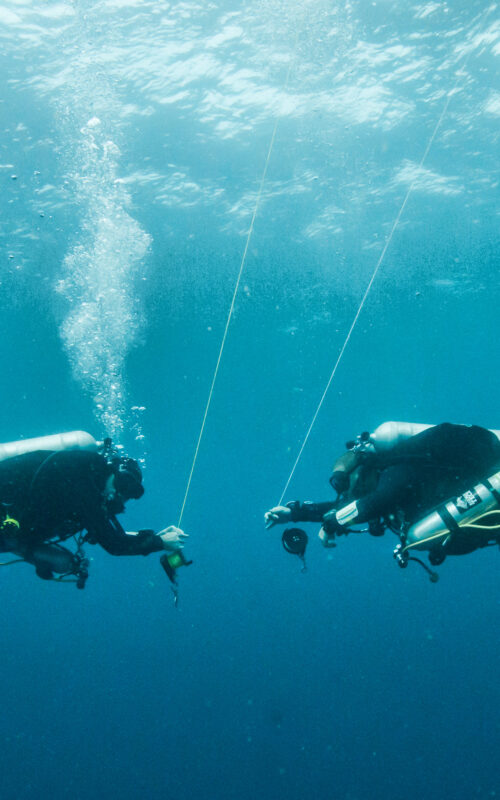
Discover how to become a technical diver with Big Blue Diving’s comprehensive training path. From recreational diving certification to advanced tech diving courses and internship opportunities, start your underwater adventure today.
Your Journey from Bubble Blower to Deep-Sea Explorer
So, you’ve watched The Abyss one too many times and now you’re convinced that recreational diving’s 40-meter limit is basically just paddling in a kiddie pool? Welcome to the club. Technical diving is calling your name, and trust me, it’s way cooler than your friends realize (until they see your Instagram posts from inside a shipwreck at 60 meters).
But here’s the thing: you can’t just strap on seven tanks, clip fourteen backup lights to your harness, and descend into the abyss. Technical diving requires serious training, dedication, and the right dive center to guide you through the process. That’s where Big Blue Diving and Big Blue Tech come in—your one-stop shop for transforming from a casual reef-gazer into a certified deep-diving, wreck-penetrating, mixed-gas-breathing aquatic superhero.
Step 1: Master Recreational Diving Fundamentals (Yes, You Actually Need These)
Before you can explore deep wrecks or venture into overhead environments, you need rock-solid recreational diving skills. Think of it as learning to walk before you run—except underwater, with equipment that costs more than your car.
Open Water Diver Certification
Start your diving journey with Big Blue Diving’s Open Water Diver course. This is where you’ll learn the basics: how to breathe underwater without panicking, why your mask keeps flooding (spoiler: you’re probably making a weird face), and the eternal mystery of achieving perfect buoyancy.
What you’ll learn:
- Essential dive theory and physics
- Equipment setup and maintenance
- Basic underwater navigation
- Safety procedures and emergency responses
- Buoyancy control (the skill that separates divers from underwater flailing tourists)
Advanced Open Water Diver
Once you’ve mastered the basics, the Advanced Open Water course with Big Blue Diving introduces you to specialty diving areas like deep diving, navigation, wreck diving, and night diving. This is where things get interesting, and you’ll start to understand why people become obsessed with this sport.
Rescue Diver Certification
Here’s where recreational diving gets real. The Rescue Diver course transforms you from someone who needs help to someone who provides it. You’ll learn emergency management, stress recognition, accident scenarios, and how to actually assist panicked divers without both of you ending up on the surface gasping for air.
This certification is absolutely crucial for technical diving. Tech diving instructors want to see that you can handle emergencies calmly and competently—because at 70 meters, there’s no swimming quickly to the surface.
Divemaster Training (Optional but Highly Recommended)
Want to really nail your fundamental skills? Consider Big Blue Diving’s Divemaster program. This professional-level course polishes your diving abilities to perfection, teaches you leadership skills, and gives you hundreds of dives worth of experience. Many technical divers start here because the skill refinement is invaluable.
Pro tip: Log at least 100-200 recreational dives before considering technical diving training. Experience matters more than the number on your certification card.
Step 2: Enter the Technical Diving Realm with Big Blue Tech
Congratulations! You’ve mastered recreational diving, you can hover motionless in the water column like a aquatic Jedi, and you’re ready for the big leagues. Welcome to Big Blue Tech, where the real adventure begins.
Technical Diving Foundations Course
The Foundations course bridges recreational and technical diving. You’ll be introduced to:
- Technical diving equipment configurations (doubles, sidemount, or backmount)
- Enhanced buoyancy and trim techniques
- Gas management and planning
- Decompression theory basics
- Team diving protocols
Think of this as technical diving kindergarten—except instead of finger painting, you’re learning why ascending too quickly from 50 meters is a very bad idea.
TDI Advanced Nitrox and Decompression Procedures
These courses often go hand-in-hand and mark your official entry into technical diving. Big Blue Tech’s Advanced Nitrox and Deco Procedures courses teach you:
- Using enriched air mixtures with oxygen percentages up to 100%
- Planning and executing staged decompression dives
- Managing multiple decompression gases
- Extended bottom times at depths beyond recreational limits
- Proper deco cylinder handling and gas switching procedures
You’ll conduct dives requiring mandatory decompression stops, extending your bottom time and depth range. This is where you start spending more time underwater than some marine biologists.
Extended Range or Trimix Courses
Ready to go deeper? Big Blue Tech offers Extended Range and Trimix training:
Extended Range allows you to dive to 55 meters using air or nitrox with accelerated decompression gases. You’ll refine your skills, extend your bottom times, and start planning serious dive expeditions.
Trimix diving introduces helium into your breathing gas, reducing nitrogen narcosis and oxygen toxicity at extreme depths. With Trimix certification from Big Blue Tech, you can dive beyond 60 meters, accessing wrecks and geological formations that 99% of divers will never see.
Advanced Wreck and Cave Diving Specialties
Once you’re comfortable with deep decompression diving, specialized training opens up:
- Advanced Wreck Diving: Learn wreck penetration techniques, line laying, silt management, and navigating complex overhead environments
- Cave Diving: Explore underwater cave systems with proper training in guideline protocols, team communication, and emergency procedures
- Rebreather Diving: Master closed-circuit rebreather technology for extended bottom times and silent, bubble-free diving
Big Blue Tech offers comprehensive training in these specialties, ensuring you’re prepared for the most challenging underwater environments.
Step 3: The Secret Weapon—Big Blue Tech Internship Program
Here’s where it gets really good. You know what’s better than taking technical diving courses? Practically living them.
The Big Blue Tech Internship Program is the ultimate accelerator for aspiring technical divers. Instead of spreading your training over months or years between vacation trips, you immerse yourself completely in the technical diving lifestyle.
What Makes the Tech Internship Special?
Intensive Skills Development: You’ll dive almost daily, allowing muscle memory and technical skills to solidify naturally. The repetition is invaluable—these aren’t skills you want to practice once and forget.
Real-World Experience: Work alongside Big Blue Tech instructors, assist with courses, and observe advanced technical diving operations firsthand. You’ll learn things that aren’t in any manual.
Cost-Effective Training: Bundling multiple certifications through the internship program is significantly more affordable than taking individual courses separately. Plus, you’re already there—no repeated travel costs.
Mentorship and Networking: Build relationships with experienced technical divers and instructors. The technical diving community is tight-knit, and these connections are invaluable for future dive expeditions and career opportunities.
Equipment Familiarity: Extended time with technical diving configurations allows you to truly understand your equipment rather than fumbling with it during short training courses.
Progressive Learning: Move seamlessly from one certification level to the next without long breaks that cause skill degradation.
Is the Tech Internship Right for You?
The internship is perfect if you’re:
- Serious about becoming a technical diver quickly and competently
- Able to dedicate several weeks or months to intensive training
- Looking to possibly pursue professional technical diving or instruction
- Wanting to maximize value while minimizing total training time
- Ready for a life-changing underwater adventure
The Technical Diver Mindset: Are You Ready?
Technical diving isn’t just about certifications and equipment—it’s a completely different approach to diving. Here’s what you need:
Meticulous Planning: Every technical dive requires detailed planning—gas calculations, decompression schedules, contingency plans, and team briefings. If you’re a “let’s just wing it” person, tech diving will teach you otherwise (or eliminate you from the gene pool).
Equipment Obsession: Technical divers are gear nerds. You’ll spend hours configuring equipment, servicing regulators, and debating the merits of different buoyancy wing designs. Your non-diving friends will stop inviting you to parties.
Conservative Decision-Making: Technical diving rewards caution and punishes complacency. The best technical divers are the ones who call dives when conditions aren’t perfect.
Physical Fitness: Technical diving gear is heavy. Decompression dives are long. You’ll need reasonable fitness levels and cardiovascular endurance.
Commitment to Continuing Education: The learning never stops. Technical diving constantly evolves with new techniques, equipment, and safety protocols.
Why Choose Big Blue Diving and Big Blue Tech?
Not all dive centers are created equal, especially for technical diving training. Here’s why Big Blue stands out:
Comprehensive Pathway: Seamless progression from beginner recreational diver to advanced technical diver, all within one trusted organization.
Experienced Technical Instructors: Big Blue Tech instructors bring years of real-world technical diving experience, not just teaching credentials.
Quality Equipment and Facilities: Access to properly maintained technical diving equipment and facilities designed for advanced training.
Safety-First Culture: Technical diving is inherently risky—Big Blue’s emphasis on safety protocols and conservative diving practices keeps you alive to dive another day.
Flexible Training Options: From individual courses to comprehensive internship programs, Big Blue offers training solutions for different schedules and learning styles.
Community and Support: Join a community of like-minded divers who share your passion for exploration and adventure.
Your Technical Diving Timeline
Wondering how long this journey takes? Here’s a realistic timeline:
Year 1: Complete Open Water, Advanced Open Water, and Rescue Diver certifications with Big Blue Diving. Log 50-100 recreational dives, working on buoyancy, trim, and navigation.
Year 2: Achieve Divemaster (optional) and complete Foundations, Advanced Nitrox, and Decompression Procedures with Big Blue Tech. Log technical training dives and practice decompression procedures.
Year 3: Advance to Extended Range or Trimix courses, pursue specialty training in wreck or cave diving, and continue logging technical dives.
Accelerated Option: Complete the Big Blue Tech Internship Program and compress 2-3 years of training into intensive months of dedicated learning and diving.
Common Technical Diving Myths (Debunked)
Myth: “Technical diving is only for crazy risk-takers.”
Reality: Technical divers are actually more conservative than recreational divers, with detailed planning and multiple redundant safety systems.
Myth: “You need to be ex-military or a professional to tech dive.”
Reality: Anyone with good recreational diving skills, proper training, and the right mindset can become a competent technical diver.
Myth: “Technical diving equipment costs a fortune.”
Reality: It’s expensive, yes, but comparable to many adventure sports. Consider it an investment in incredible experiences.
Myth: “Technical diving is just showing off.”
Reality: It’s about accessing places few people ever see—unexplored wrecks, pristine cave systems, and underwater environments of breathtaking beauty.
Take the Plunge: Start Your Technical Diving Journey Today
The path from recreational diver to technical diver is challenging, rewarding, and absolutely worth it. The underwater world’s most spectacular sites—deep wrecks, pristine caves, and unexplored environments—await those willing to pursue advanced training.
Big Blue Diving provides the perfect foundation with comprehensive recreational training programs that build essential skills. When you’re ready to push beyond recreational limits, Big Blue Tech offers world-class technical diving courses and the transformative Tech Internship Program.
Don’t spend another year looking at photos of deep wrecks and cave systems, wishing you could be there. Start your journey today with Big Blue Diving, progress through the training pathway, and discover what lies beyond recreational diving’s limits.
The abyss is calling. Are you ready to answer?
Contact Big Blue Diving today to start your Open Water certification, or speak with Big Blue Tech about technical diving courses and the Tech Internship Program. Your underwater adventure begins now.
