


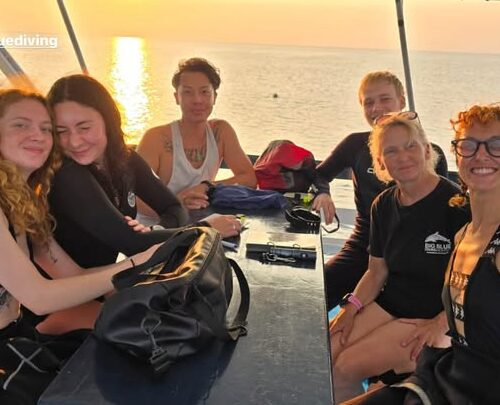
If you’re stuck in a career that drains your energy instead of inspiring it, maybe it’s time to swap fluorescent lights for sunsets and spreadsheets for scuba tanks. The truth is, life’s too short to feel trapped in a job you don’t love—and SSI Divemaster Training on Koh Tao offers a genuine escape route into a life filled with adventure, purpose, and community. As a Divemaster, you’re not just changing careers; you’re stepping into a role that lets you explore the ocean every day, guide divers from all over the world, and build a future rooted in passion rather than obligation. It’s fun, it’s exciting, it’s meaningful—and it might just be the single best decision you ever make for your happiness, your confidence, and your future.
Introduction: Why this matters
Once upon a time, you might have picked a dive shop simply because it looked cheap, and off you went into the blue. But if you’re reading this with one eye on the horizon and the other on that scuba logbook, chances are you realise: going professional changes everything.
Yes—it’s about certification, yes—it’s about skills, but above all it’s about becoming employable in the diving world. Getting your SSI Divemaster Training on Koh Tao through a dedicated Dive pro center will make all the difference in the long run.
So, if you’re serious about your dive industry future, read on. And if you’re just chasing cheap dives… well… pick somewhere else and enjoy—but this isn’t where you’ll find cheap-and-easy certification.
1. Aim: From recreational diver to employable professional
The Divemaster course at Big Blue Diving takes you from being a recreational scuba diver into the role of a fully employable scuba diving professional. You’ll learn to guide certified divers, assist on courses, work on dive boats, teach snorkelling— in short: you’ll move into the world of diving as a job, not just a holiday.
On completion you’ll be a paid-up SSI Divemaster ready to work and earn money doing something you love.
Note: This is a career route, not just another dive certification.
2. Target audience: Who should (and shouldn’t) do this program
Should do if you:
Are serious about making diving a career, not just ticking off dives.
Are looking for employment opportunities in the dive industry.
Want to train under a dive centre that employs from within – big plus: Big Blue Diving hires their own graduates.
Understand that this is an investment—in time, energy and probably cost—towards a professional role.
Should not do if you:
Are just seeking cheap diving and want maximum dive count for minimal spend.
Are treating Divemaster training like a fun-holiday with certification on the side.
Want minimal supervision and maximum “fun dives” without structured professional development.
In short: go somewhere else if you’re simply in it for the cheapest dives. Stay here if you’re in it for the dive industry.
3. Programme details: What you’ll actually do
You’ll need to be Rescue certified and have a recognised First Aid / CPR qualification (e.g. Emergency First Response or React Right) within the last two years.
Begin the course with a minimum of 40 logged dives. If you don’t yet have 40, Big Blue Diving offers reduced-rate dives (750 THB per dive) to help you reach the number.
Equipment is mostly provided: the school supplies diving gear except dive computer, DSMB, knife, compass and whistle (required by SSI). You’re also strongly encouraged to have your own torch (night diving) and slate (site learning). A 15 % professional discount applies to gear purchased via the centre.
4. Duration and commitment: Expect 6–8 weeks (minimum)
To reap the full benefit you should allow at least six to eight weeks to complete the programme. Why? Because this isn’t a compressed certificate for fun: it’s intensive, involves mentoring, real guiding practice and tuition with professional expectations. All full-time Divemasters at Big Blue graduated through their own programme, and the dive centre is committed to supporting their graduates into work in the industry.
5. Mentoring and support: You’re not locked in on your own
While doing your SSI Divemaster training on Koh Tao you’ll be guided and supported by experienced instructor mentors (for example Fiona Anne & Martin Lindquist) who are always available, offer one-on-one coaching, help work through issues and organise social events — meaning you’ll be part of a community, not just a class.
6. Why choose Big Blue Diving for your Divemaster course?
Expertise & reputation: With over 30 years in business, Big Blue Diving is renowned for their high standards.
Professional team: Their instructors are accredited, experienced, passionate about diving and committed to preparing you for a successful career.
World-class facilities: They have modern equipment, purpose-built large dive boats and excellent training resources.
Hands-on experience: Practical training sessions, real guiding opportunities, navigating actual dive sites.
Small group sizes: Personalized attention helps you progress at your own pace.
Diverse dive sites: On the island of Koh Tao you’ll explore rich underwater ecosystems, helping build your skills in real conditions.
Environmental responsibility: The centre emphasises sustainable diving practices and marine conservation, instilling in you a sense of responsibility.
- Tech Diving: An opportunity to discover what seperates the men from the boys with our Tech team at Big Blue Tech.
Networking opportunities: Training here opens doors—you’re not just getting a certificate, you’re joining a dive professional community.
7. Course structure: What the syllabus includes
The programme covers the following key components:
Dive Guide & Science of Diving: You’ll prepare to lead certified divers and understand the theoretical side of diving (physics, physiology, equipment, ecology).
Practical workshops: Deep, Navigation, Night, Guiding & Briefing. Skills circuits, buoyancy, stress & rescue including missing diver scenarios.
Lectures: Topics include physics, decompression theory, physiology, ecology, equipment plus dive shop management, retail sales and marketing.
Shadowing & assisting: Over and above baseline requirements, you’ll shadow instructors and divemasters, assist on various courses (Basic through Rescue) and guide/brief on boats, ensuring a broad range of experience.
8. Tech diving offered: Take your career further
Big Blue also runs a technical diving department. If you wish to explore sidemount, twinsets, decompression diving you’ll find courses such as Advanced Wreck, Intro to Tech, Nitrox, etc. Discounts apply to recreational programs too (Deep, Wreck, Enriched Air, Solo, DPV).
9. Location advantage: Why Koh Tao works
The island offers warm, clear waters, a variety of dive sites with gentle currents (ideal for training), and a dive-friendly lifestyle. Big Blue’s long history on Koh Tao ensures they know the terrain, the sites, and the industry.
10. Costs & equipment: Be prepared
While your tuition will cover much of the training, don’t treat it like a cheap holiday. Your investment includes:
Time (6–8 weeks or more)
Pre-requisite certifications (Rescue, First Aid/CPR)
Dive log entries to reach required number of dives
Some personal gear (dive computer, compass etc.)
Accommodation, living expenses, possibly opportunity cost
Think of it as a professional training programme, not just another fun-week in the tropics.
11. Outcomes: What you’ll walk away with
Upon completion you’ll be:
Recognised as an SSI Divemaster (professional level)
Ready to guide dives, assist instructors, work on boats or at dive resorts
Equipped with practical experience—not just theory
Networking with the team and potentially employed by Big Blue or elsewhere in the industry
Positioned to take further professional steps (Instructor, Tech Diving etc.)
12. What sets you apart from ‘holiday divers’
Many dive centres offer “fast-track” Divemaster courses emphasising dive count and certification speed. At Big Blue Diving the emphasis is profession, not pastime. You’re doing this because you want to work in diving, not just collect dives. If you do it for cheap dives you waste the opportunity. If you do it with purpose, you build a meaningful career.
13. Tips & insider advice
Confirm what employment support is offered on completion.
Ask for mentor/instructor names and ratio of students to instructors.
Get clarity on how many logged dives you’ll reach and whether reduced-rate dives apply.
Bring some personal gear (dive computer etc.) – might be cheaper to buy ahead.
Consider living costs on Koh Tao for the duration (weeks to months).
Use the “career route” mindset: network, shadow, assist – not just cram dives.
Enjoy the island, yes—but focus on professional growth.
14. Summary: Is this the right step for you?
If you’re ready to commit to a professional path in diving, if you’re willing to train hard, learn, shadow, assist and eventually work, then doing your SSI Divemaster training on Koh Tao with Big Blue Diving in Koh Tao is absolutely the right move. But if you’re just looking for cheap diving, maximum dive count for minimal spend, then it’s not. Be honest with your goals—and choose the training path that suits you.
15. Conclusion
Turning a love of diving into a career takes more than enthusiasm—it takes training, mentorship, experience and the right environment. Big Blue Diving offers you that environment on the beautiful island of Koh Tao. But the key is your mindset: if you see it as launching a career, you’ll get value and results. If you see it as just another dive holiday… well, you’ll get something less than you could. So decide, commit, train—and let your underwater journey lead to something extraordinary.
Frequently Asked Questions
Q1: What are the prerequisites for the Divemaster course?
You must be certified in rescue techniques and hold a recognised First Aid/CPR certificate (e.g. Emergency First Response or React Right) issued within the last two years. You also need at least 40 logged dives to start—but Big Blue offers rate-reduced dives to help you achieve that if you don’t yet have them.
Q2: How long does the Divemaster course take?
The recommended minimum is six to eight weeks to get the full benefit of the education, training and experience required. This is not a short “holiday-certification”.
Q3: Will I be employable immediately after completion?
Yes—on completion you’ll be an SSI Divemaster ready to work: guiding certified divers, assisting on courses, working on boats/resorts, and teaching snorkelling courses. Big Blue also supports graduates in obtaining work in the industry.
Q4: What equipment do I need to provide myself?
Big Blue provides most diving equipment for the program, except the dive computer, DSMB (surface marker buoy), knife, compass and whistle (required by SSI). It’s also advantageous to have your own torch and slate for training purposes. When you buy gear via Big Blue you’ll receive a professional discount (15%).
Q5: What distinguishes this course from “cheap dive holiday” programmes?
The difference lies in purpose, scope, structure and outcome. This programme is about professional development with mentoring, hands-on guiding, boat-work, assisting instructors—not just accumulating dives. If you’re only after low cost dives, this isn’t built for that. If you’re ready to launch a career, this is exactly what you need.
Q6: Can I begin the course at any time?
Yes. The programme runs on a rolling academic basis, so you can start your Divemaster training whenever you’re ready.
