Trevally
Scientific name Caranx sexfasciatus
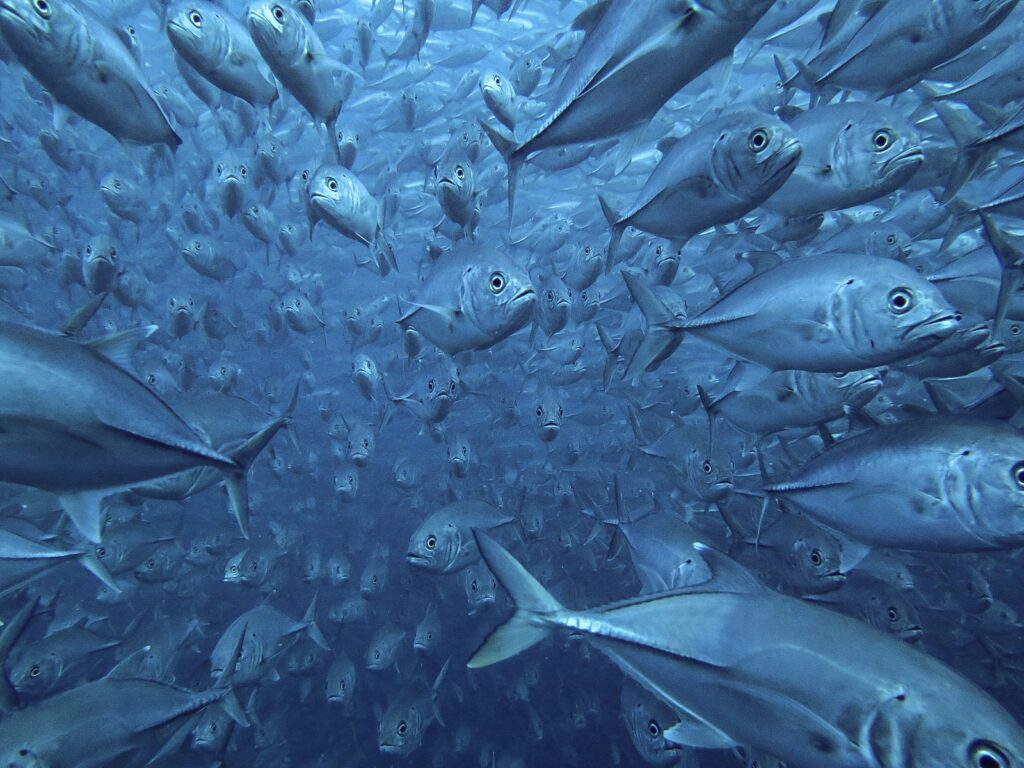
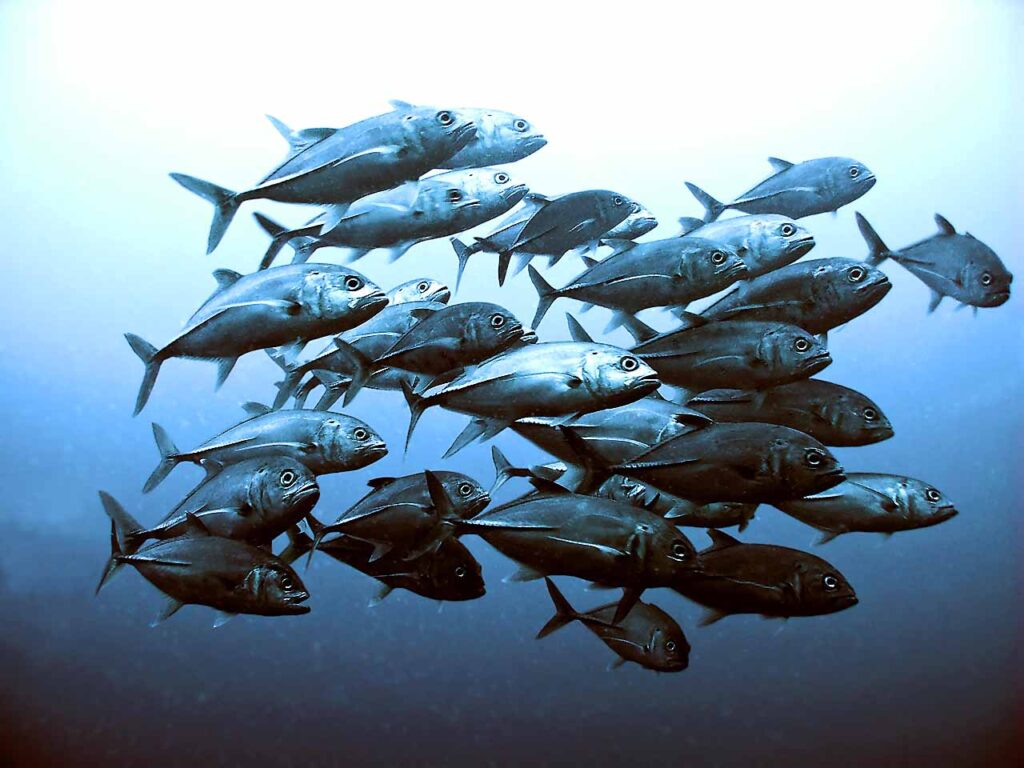
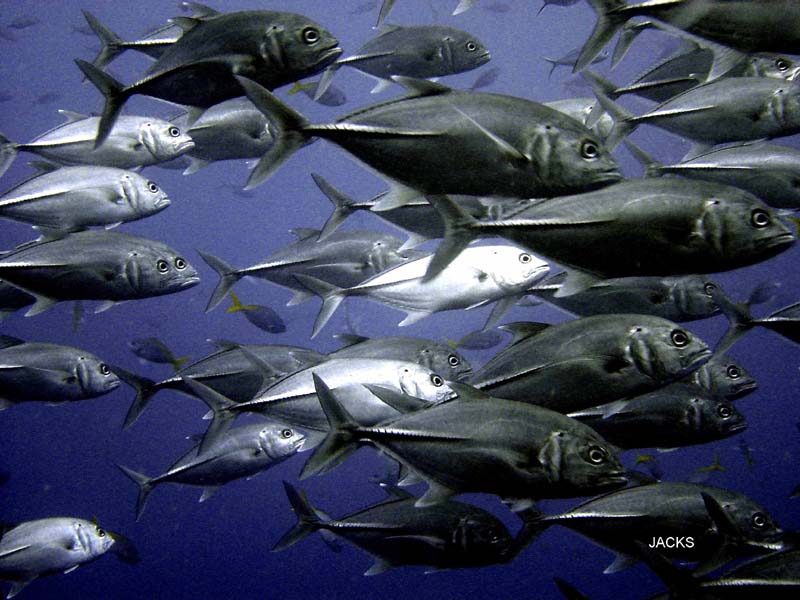
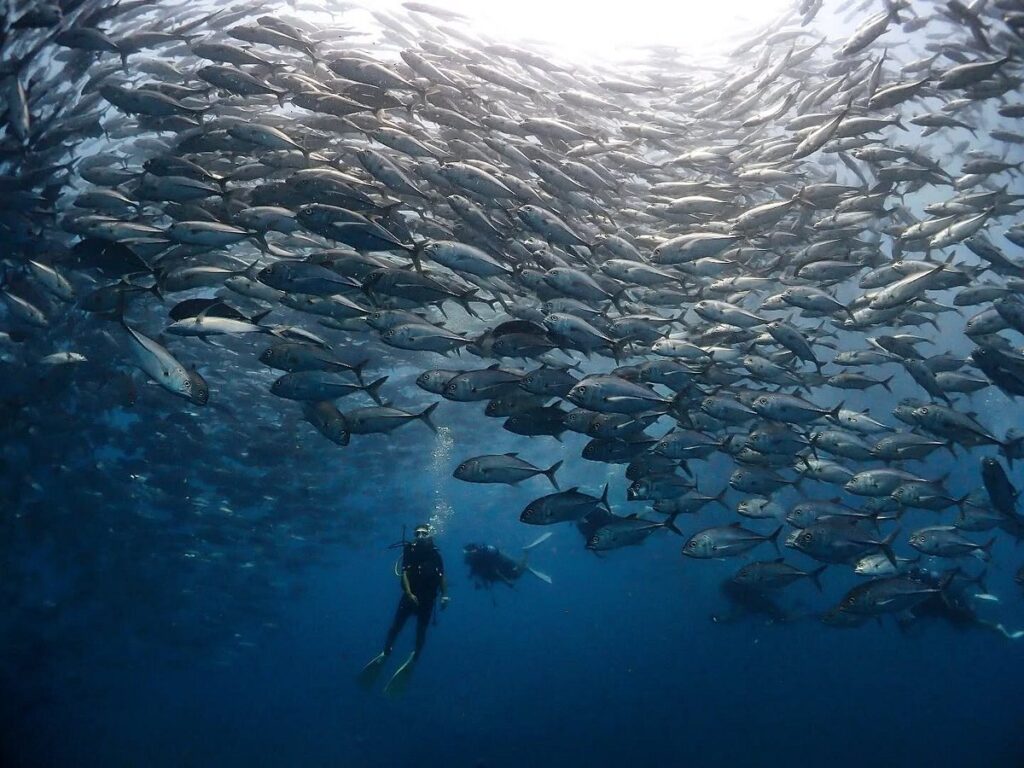
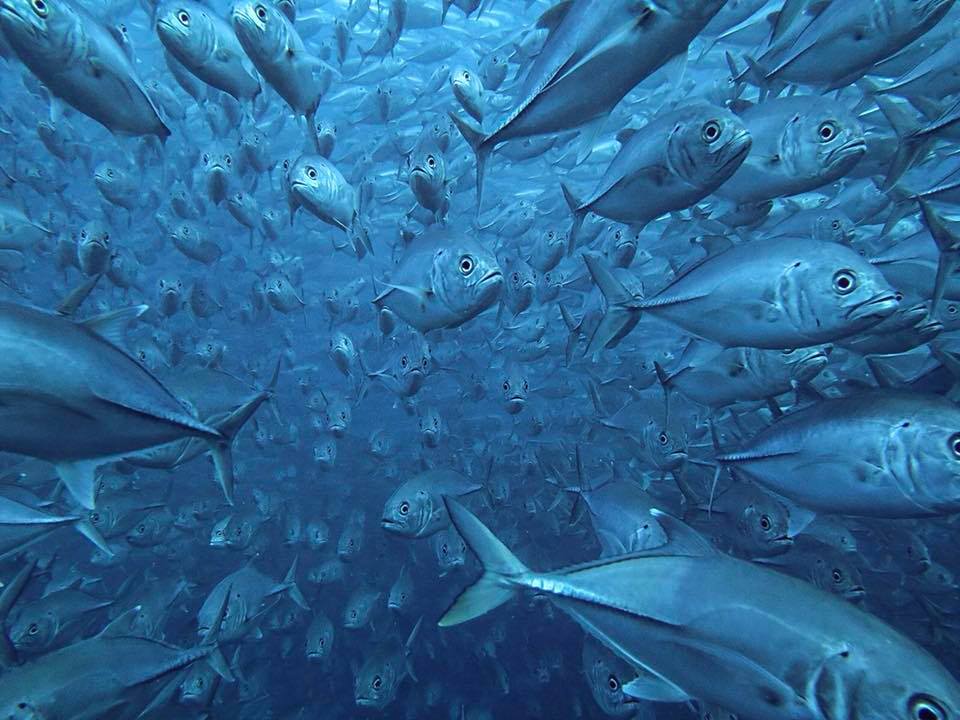
Around Koh Tao, you’ll most often see Bigeye Trevally schooling in tight formations around pinnacles, while Giant Trevally tend to patrol more independently. Bluefin Trevally add a flash of electric blue to the reef, especially when hunting.
They are unmistakable in motion — muscular bodies, deeply forked tails and explosive acceleration when they strike. When a school moves in synchronised formation around a pinnacle, the reef can suddenly feel alive with motion. And when they hunt, it’s fast, precise and dramatic.
Trevally are key apex reef predators. They help regulate populations of smaller fish and play an essential role in maintaining balance within the reef food chain. Their presence is often a sign of a healthy ecosystem with strong prey availability.
They are not dangerous to divers, but their hunting bursts can be startling if you’re in the middle of the action. When trevally begin corralling bait fish, the entire water column can erupt in movement.
Seeing Trevally in full hunting mode is one of those moments that reminds you the reef is wild — organised chaos unfolding in seconds.
Find Trevally at...
Divemaster's tip
Watch the edges of schooling bait fish. If you see smaller fish tightening their formation, look for trevally circling just outside the group. They often strike from below or from the side at high speed.
At offshore pinnacles, hang slightly off the reef and scan the blue — large Giant Trevally often patrol the deeper edges where current meets structure.
What do they eat?
Trevally feed on schooling fish, squid and crustaceans. They are aggressive, coordinated hunters and often work together to trap prey into tight bait balls before striking.
Their speed, stamina and group hunting behaviour make them one of the most effective predators on the reef — and one of the most exciting to witness underwater.
Gallery