


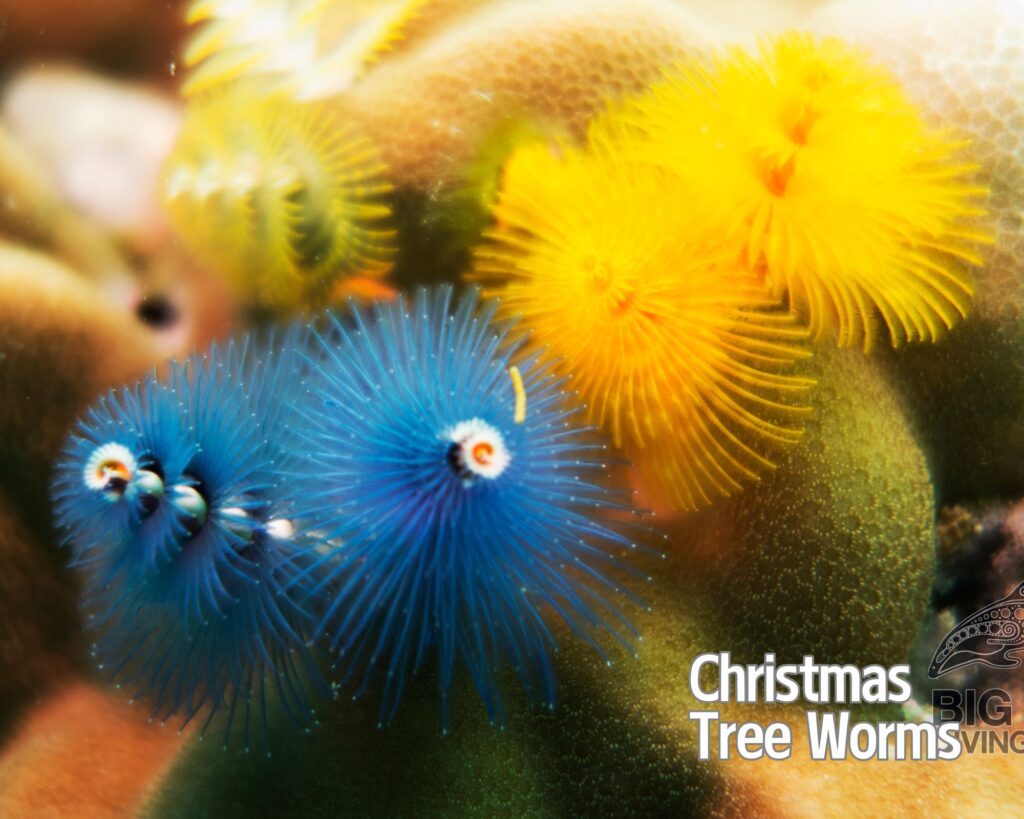
Christmas Tree Worm
Scientific name Spirobranchus giganteus
Christmas tree worms are some of the most colourful things you’ll find on coral reefs. They are often found together which can make it look like fields of colourful flowers, but underwater.
Newcomers to the underwater world often look at you sideways when you tell them that a Christmas tree worm is an actual worm and not just a cute name it’s been given over the years. They really are worms – a tube-building polychaete worm. They are very common in all of the tropical areas on the planet and are the most common type of polychaete worm in the oceans.
Christmas tree worms burrow into live coral to form their homes, and once they move in they never move out. They will spend their entire lives in the same spot. Usually, you will only be able to see one part of its body – its specialized mouth appendages called prostomial salps. Each of these spiral crowns has feather-like tentacles called radioles. The worm uses these radioles to both breathe and catch food that floats by in the water column.
Find Christmas Tree Worm at...
Divemaster's tip
When you find a ‘field’ of Christmas tree worms on a dive, flick your fingers in the area around them (but don’t touch them). Watch how quickly they retract back into their tubes! Then take a second to imagine what a Christmas tree worm looks like from the Christmas tree down.
What do they eat?
Christmas tree worms have very simple diets. They catch phytoplankton as it floats by in the water using their radioles and prostomial salp appendages. Once they catch something, they pass the food down grooves using ciliary tracks – lines of hair-like extensions – and into its mouth. The worm will filter out particles that are too large, and will even save grains of sand in special sacks for later tube building.
