


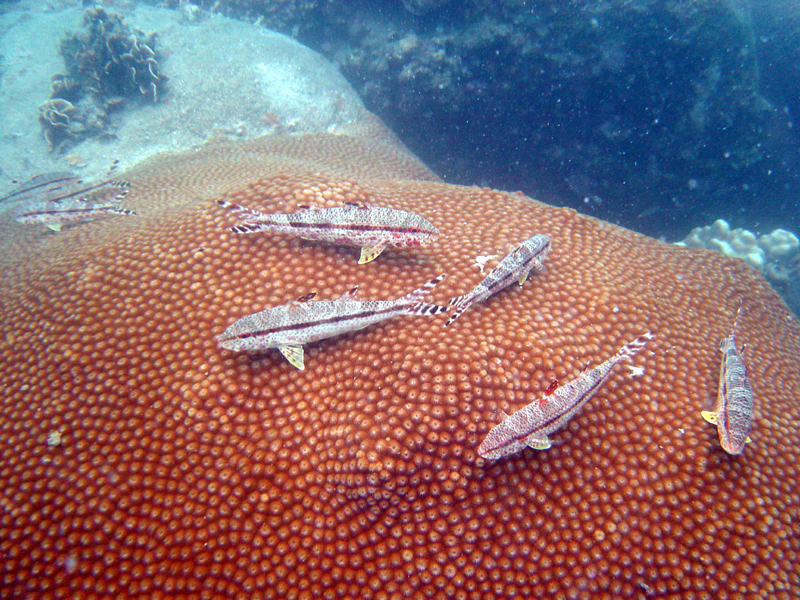
Goatfish
Scientific name Mullidae
Goatfish are easily recognised by the pair of sensory barbels (whisker-like feelers) under their chin. These barbels are packed with chemoreceptors, allowing them to detect hidden prey in sand and rubble — giving them their distinctive, constantly “searching” behaviour.
Around Koh Tao, goatfish are common on sandy patches near reefs and along gentle slopes between 5–25 metres. Some species, like the Yellowfin Goatfish (Mulloidichthys vanicolensis), often form schools that hover just above the seabed. Others, such as the Dash-and-Dot Goatfish (Parupeneus barberinus), are more frequently seen foraging alone or in small groups.
They are active daytime feeders, using their barbels to probe the sand before rapidly digging with their mouths to uncover buried crustaceans, worms and small invertebrates. When feeding in groups, they can stir up noticeable clouds of sand as they move across the bottom together.
Their coloration varies from pale sandy tones to bright yellows and reds, often with stripes or spots that help them blend into reef and seabed environments.
Goatfish play an important ecological role by turning over sediment and helping recycle nutrients within the reef ecosystem.
Find Goatfish at...
Divemaster's tip
Look at sandy patches next to reef structures rather than directly on coral. If you see small puffs of sand rising repeatedly, goatfish are likely feeding there.
Approach calmly — schools may allow you to get quite close if you move slowly and avoid sudden fin kicks.
What do they eat?
Goatfish feed on small crustaceans, worms, molluscs and other invertebrates buried in sand or rubble.
Their sensitive barbels allow them to locate prey hidden beneath the surface, making them expert foragers and important recyclers of the reef environment around Koh Tao.
